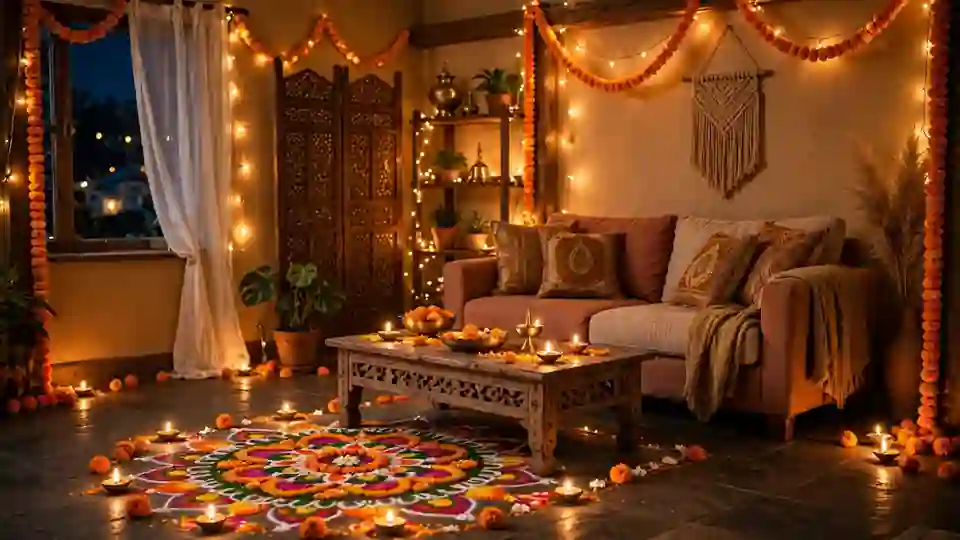
There is a particular magic to a home glowing with diyas on Diwali night — and it has almost nothing to do with how much money was spent. Some of the most beautiful festive homes are decorated with marigolds from the local market, diyas bought for a few rupees each, and a little creativity. This guide shows you how to transform your home for Diwali step by step, on a genuinely modest budget. Expect to spend one weekend and a small amount of money; expect guests to ask who your decorator was. Every step uses materials that are easy to find in any Indian city or town.
What You Will Need
- Clay diyas (20–30 for a good glow), cotton wicks and mustard or sesame oil — the heart of Diwali decor
- Fresh marigold strings and a few loose flowers from the local flower market (buy a day before, not earlier)
- Fairy lights — one or two strings, warm white; reuse last year’s if they still work
- Basic craft supplies: coloured paper, scissors, glue, and old newspapers or cloth for rangoli practice
- Rangoli colours or flower petals, depending on which style you prefer
- A small budget (even a few hundred rupees goes far) and one free weekend afternoon for the main decorating
The Steps
- Declutter and deep-clean first — decoration starts with a clean canvas. Diwali tradition itself begins with cleaning, and there is a practical reason: decorations look twice as good in a tidy home. Spend a day clearing surfaces, dusting shelves and putting away everyday clutter. You will also discover decorations from previous years hiding in cupboards — free decor you already own. Do not buy a single new item until the cleaning is done; you may find you need far less than you thought.
- Plan your glow zones before buying anything. Walk through your home in the evening and note where light will matter most: the entrance, the living room, the balcony or windows, and the puja corner. Diyas and lights concentrated in these zones create a far richer effect than the same items scattered randomly. Sketch a rough plan — entrance gets the grandest treatment, living room gets warmth, balcony gets the fairy lights. This plan stops impulse buying and keeps your spending focused.
- Soak your clay diyas overnight. New clay diyas absorb oil quickly and burn out fast if used dry. Soak them in water for several hours (overnight is ideal), then dry them fully before filling. This simple traditional step makes each diya burn longer and steadier — meaning fewer refills through the evening and less oil wasted. While they soak, you can move on to the flower arrangements.
- Dress the entrance — it sets the whole tone. Hang a marigold toran (garland) across the main door, place two rows of diyas or a rangoli flanking the entrance, and add one string of fairy lights if you have it. The entrance is what guests see first and what neighbours notice, so this is where a small effort pays the most. A simple petal-and-diya rangoli at the doorstep, refreshed on the main festival days, looks stunning and costs almost nothing.
- Build a warm living room with layers of light. Place diyas in clusters of three or five on side tables, shelves and window sills — odd-numbered clusters look naturally pleasing. Drape fairy lights along a curtain rod or around a bookshelf. Add marigold strings to doorframes or mirror edges. The secret is layering: diyas at low level, lights at mid level, and flowers adding colour. Keep one area — perhaps the coffee table — as a small festive centrepiece with diyas, flowers and a decorative plate.
- Create a beautiful puja corner. Clean the puja area thoroughly, lay a fresh cloth, and arrange your idols or pictures with marigold garlands. Place diyas symmetrically on either side and add a small rangoli or petal design in front. This corner deserves your best diyas and freshest flowers — it is the spiritual heart of your Diwali decor. If you celebrate with family rituals, a beginner’s guide to celebrating Diwali at home covers the traditions alongside the decoration.
- Make a rangoli — flowers for beginners, colours for the confident. If you are new to rangoli, a flower-petal rangoli is forgiving and gorgeous: outline a simple circular or diya-shaped design with chalk, then fill it with marigold, rose and jasmine petals. For colour rangolis, practise the design on newspaper first, then pour colours through a funnel or your fingers for control. Place it where it will be seen but not walked over — the entrance or the living room corner works best.
- Add scent and sound for atmosphere. Decoration is not only visual. Simmering a pot of water with cinnamon, cloves and orange peel fills the home with a festive aroma for almost no cost. Light a stick of good agarbatti near the entrance. Play soft festive music or bhajans in the background when guests arrive. These sensory touches make a modestly decorated home feel rich and welcoming — guests remember how a home felt far longer than what it looked like.
- Light everything in the right order on Diwali evening. Start about thirty minutes before sunset: fill diyas with oil and place wicks, then light the puja corner first, followed by the entrance, then the living room and balcony. Fairy lights go on last. Lighting in this order means everything glows together at its best as darkness falls. Keep a small jug of oil and spare wicks handy for refills through the evening, and never leave burning diyas unattended — Diwali safety basics matter as much as the beauty.
- Reuse, store and plan for next year. After the festival, clean and store reusable items — fairy lights, brass diyas, decor pieces — in labelled boxes. Note what ran out and what you wished you had bought; this list becomes next year’s shopping guide and stops repeat impulse buying. Well-kept decorations compound in value: each Diwali your collection grows while your spending shrinks. That is the real budget secret — not spending less once, but building a reusable festive kit over the years.
Common Mistakes to Avoid
The classic mistake is buying before planning — returning from the market with armfuls of decor that does not suit your space. Plan zones first, buy second. Another is mixing too many colour themes; pick two or three festive colours (gold-red-orange is timeless) and stay consistent. People also over-light small rooms, which feels harsh rather than warm — fewer, well-placed lights beat a blaze of fairy lights. Buying flowers too early means wilted garlands on the main day; buy marigolds a day before at most. And forgetting safety — diyas near curtains or paper decor are an accident waiting to happen, so always check placements. If you are also preparing festive food, homemade versus store-bought sweets helps you decide what to serve your guests.
Your Final Checklist
- Home deep-cleaned and old decorations rediscovered before buying anything
- Glow zones planned: entrance, living room, balcony, puja corner
- Clay diyas soaked overnight; oil, wicks and fairy lights ready
- Entrance dressed with toran, diyas and rangoli
- Living room layered with clustered diyas, lights and flowers
- Puja corner cleaned and decorated with fresh flowers
- Rangoli made (flowers or colours) in a visible, protected spot
- Scent and music arranged for atmosphere
- Lighting order planned for Diwali evening; safety checks done
- Reusable decor cleaned, stored and labelled for next year