
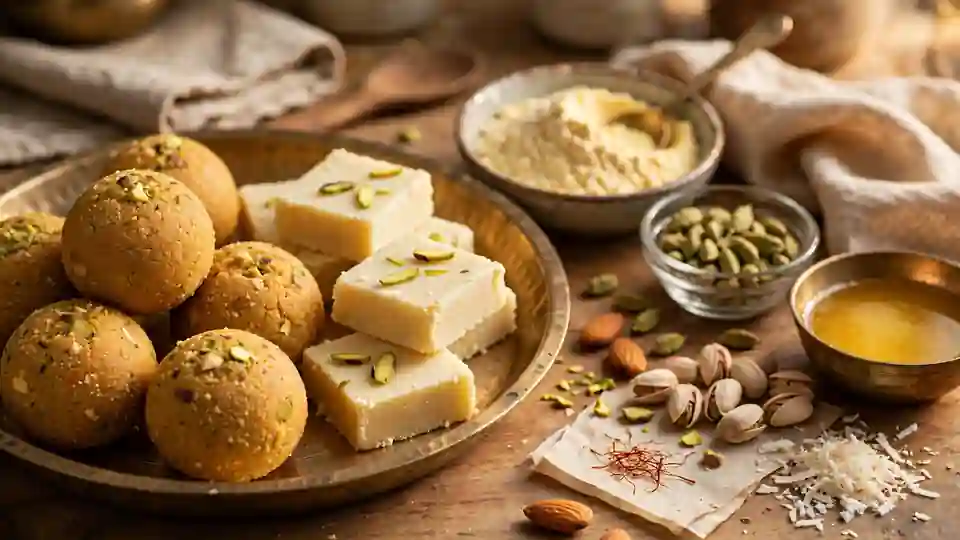
Every Diwali, Indian households face a delicious dilemma: spend a day making sweets at home, the way generations did, or pick up gleaming boxes from the mithai shop and spend the day on everything else? Both options fill the house with festivity, but they differ in cost, taste, health, effort and even sentiment. Some families feel guilty buying everything; others feel exhausted making everything. The truth is that this is not a contest with one winner — it is a practical decision about your time, your budget and your family’s tastes. By the end of this comparison, you will know exactly which choice — or combination — makes sense for you this year.
The Quick Verdict
Homemade sweets win on freshness, customisation and emotional value, and they are usually cheaper per kilogram for simple recipes — but they cost you significant time and effort, and results vary with skill. Store-bought sweets win on convenience, consistency and variety, and professional mithai shops produce finishes most home cooks cannot match — but you pay a premium, especially during the festive rush, and you have less control over ingredients. For most families, the sweet spot is a mix: homemade for the one or two signature items your family loves, store-bought for variety and gifting. Prices vary widely by city and shop, so compare current prices before deciding.
Side-by-Side Comparison
| Criterion | Homemade Diwali Sweets | Store-Bought Diwali Sweets |
|---|---|---|
| Cost | Usually cheaper per kg for simple recipes (ladoo, barfi); speciality sweets needing costly ingredients can approach shop prices | Higher per kg, with festive-season premiums; premium and branded shops charge significantly more |
| Taste and freshness | Unbeatable freshness; made to your family’s exact taste — less sweet, more ghee, extra nuts, your call | Consistent and professional, but mass production means standardised taste; freshness varies with the shop’s turnover |
| Ingredient control | Full control — you choose the ghee, the sugar level, the quality of dry fruits; easy to adjust for diabetics or health-conscious family | Little control; commercial sweets often use more sugar and cheaper fats — check with trusted shops about what they use |
| Time and effort | High — shopping for ingredients, hours of cooking, and cleanup; a full sweet-making day is genuinely tiring | Near zero — order or pick up; the time saved can go to decoration, guests or rest |
| Variety | Limited by your skill and patience — most families make two or three types well | Enormous — dozens of varieties, regional specialities and fusion sweets no home kitchen would attempt |
| Shelf life and gifting | Short — most homemade sweets last 3–5 days; not ideal for couriering or distant gifting | Longer shelf life and professional packing make them far better for gifts and shipping to relatives |
| Emotional value | Very high — the smell of ghee in the kitchen, family recipes, children helping; these become festival memories | Lower, though a box from a beloved old shop carries its own nostalgia for many families |
The Case for Homemade Sweets
There is no replicating the taste of sweets made fresh in your own kitchen, tuned to exactly how your family likes them. You control every ingredient — real ghee instead of vanaspati, jaggery instead of refined sugar, the dry fruits you actually want. For simple recipes like besan ladoo, coconut barfi or shankarpali, homemade is genuinely cheaper than the shop, sometimes dramatically so. And the process itself is part of the festival: children rolling ladoos, grandparents supervising, the whole house smelling wonderful. Honest weaknesses: it is exhausting, especially for working parents already stretched thin during festival season; results depend on skill and a finicky recipe can fail; and homemade sweets spoil quickly, so you cannot make them too far in advance or send them far away.
The Case for Store-Bought Sweets
Modern Diwali life is busy, and there is no shame in outsourcing. A good mithai shop offers variety no home can match — kaju katli, motichoor ladoo, milk cake, Bengali sandesh, fusion creations — all with professional consistency and beautiful packing that is ready for gifting. For office colleagues, distant relatives and large guest lists, store-bought is simply the practical choice. Honest weaknesses: festive pricing can be steep, with premium shops charging several times the ingredient cost; you cannot verify ingredient quality, and cheaper shops may use excessive sugar or lower-grade fats; and during peak days, even good shops sell stock that is not perfectly fresh. Buy from shops with high turnover and a reputation to protect, and taste before buying in bulk.
Choose Homemade If…
You enjoy cooking (or have family members who do), you want control over ingredients for health reasons, your family has beloved traditional recipes, and you are serving people nearby within a few days. It is also the better choice when your budget is tight but your time is flexible — the savings on simple recipes are real. Pair your sweet-making with the full Diwali-at-home celebration guide for a complete festive plan, and if you are gifting what you make, budget gift ideas show how to present homemade treats beautifully.
Choose Store-Bought If…
You are short on time, need large quantities, are gifting to colleagues or distant relatives, or want varieties you cannot make at home. It is also the sensible choice when no one in the household enjoys cooking — forced festive cooking breeds resentment, not joy. The smart move: buy from trusted shops, order before the last-minute rush, and check freshness. And remember that sweets are only part of the celebration — a beautifully decorated home and a safe festival matter just as much as what is on the plate.
The Smart Mix Most Families Actually Use
Here is what experienced Diwali hosts usually land on after years of trial and error: a deliberate mix. Make one or two signature sweets at home — the family recipe everyone asks about, the one that tastes like childhood — and buy everything else. This gives you the emotional high point of homemade (the smell, the tradition, the pride) without the exhaustion of producing twenty kilos of mithai single-handedly. A practical way to organise it: homemade for what you serve your own family and close neighbours, where freshness and love matter most; store-bought for office colleagues, distant relatives and bulk gifting, where presentation and shelf life matter most. Time it well — make your homemade batch two to three days before the main celebration so it is fresh but the kitchen chaos is over, and order store-bought a day before the rush peaks so you get the freshest stock. If nobody in the house enjoys cooking, flip the ratio without guilt: buy nearly everything, but add one homemade touch like a simple shankarpali or even just beautifully arranging the bought sweets on your own festive platters. Guests respond to the care in presentation as much as to the source. The families who enjoy Diwali most are not the ones who made everything or bought everything — they are the ones who chose consciously, matched the choice to their energy, and spent the saved time actually celebrating together.