
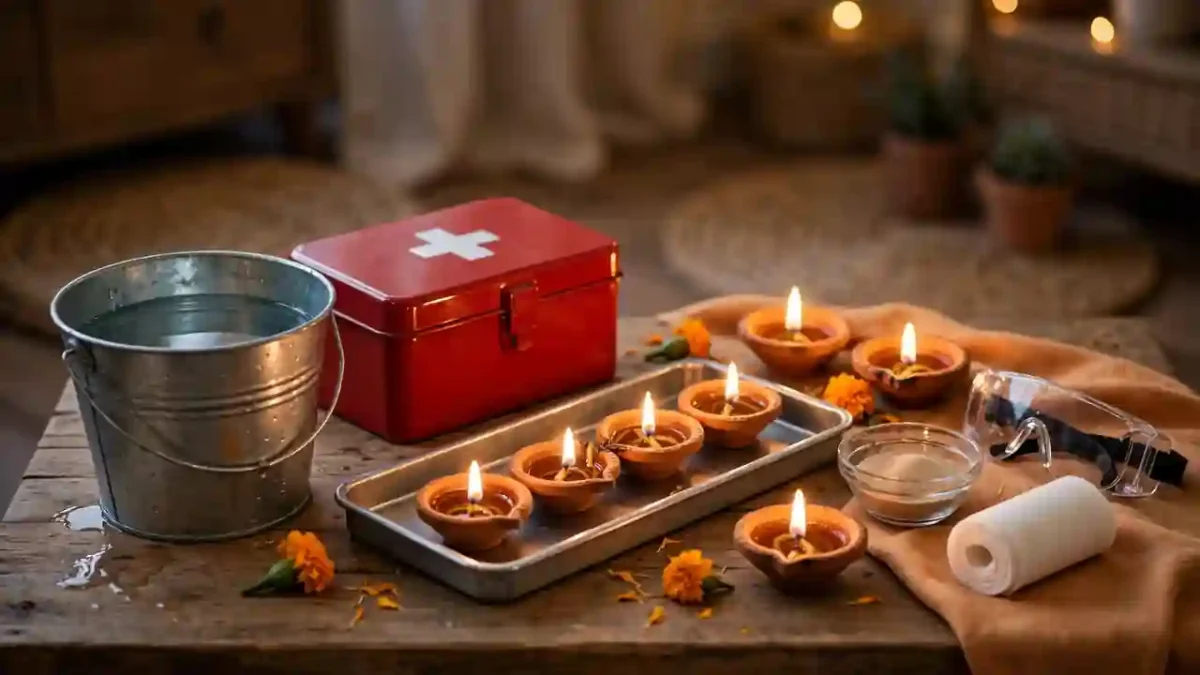
Diwali night should be remembered for glowing diyas, laughter and full stomachs — not for a trip to the emergency room. Yet every year, hospitals see entirely preventable festival injuries: burns from firecrackers, accidents with diyas placed too close to curtains, and children hurt because excitement outran supervision. The good news is that nearly all of it is avoidable with a little planning. These ten practical safety tips cover firecrackers, diyas, electrical decorations, children, pets and food — the full picture of a festival that stays joyful from the first diya to the last guest leaving. Read them once before the festivities begin, and share the key ones with everyone in the household.
1. Buy only legal firecrackers — and check local rules first
Many cities now restrict or ban certain firecrackers, or limit bursting to specific evening hours. Check your local rules before buying anything; bursting banned crackers risks fines and, more importantly, the banned varieties are often banned because they are genuinely dangerous. Buy from licensed sellers only — unlicensed roadside crackers are more likely to be unstable or mislabelled. Knowing the rules beforehand also lets you plan the evening properly instead of discovering restrictions at the last minute.
2. Keep a bucket of water and sand within arm’s reach
This is the single simplest safety measure and the one most households skip. Before lighting anything — crackers or diyas — place a full bucket of water and a bucket of sand nearby. Water handles most small fires and is essential for cooling a burn immediately; sand smothers oil-based fires that water can spread. It costs nothing, takes thirty seconds to arrange, and turns a potential panic into a calm, handled moment. Make this non-negotiable every single year.
3. Light crackers in open spaces, never from your hands
Always burst crackers in an open area away from buildings, vehicles, dry leaves and overhead wires. Light them at arm’s length with a long incense stick or sparkler — never with a matchstick held close, and never hold a cracker in your hand while lighting it. If a cracker fails to go off, do not approach it immediately; wait several minutes, then douse it with water rather than relighting it. Most serious cracker injuries come from holding, relighting duds, or bursting in crowded enclosed spaces — all entirely avoidable.
4. Dress for safety on cracker night
What you wear matters more than most people realise. Choose close-fitting cotton clothes rather than loose synthetics — synthetic fabrics catch fire faster, melt onto skin, and turn a small accident into a serious burn. Tie back long hair, avoid flowing dupattas and scarves near open flames, and wear closed footwear rather than slippers so a stray spark or hot debris does not land on bare feet. It is a small wardrobe adjustment for one evening that meaningfully reduces burn risk.
5. Supervise children constantly — excitement needs a chaperone
Children and fire are a combination that demands undivided adult attention. Young children should only handle sparklers under direct adult supervision, holding them away from the body, and should never light crackers themselves. Keep small children at a safe viewing distance from the bursting area, and make sure older kids understand the rules before the evening starts — not in the heat of excitement. One dedicated adult “safety watcher” per group of kids is a good system. The festival is for their joy; the supervision is what keeps it joyful.
6. Place diyas and candles where they cannot cause fires
Diyas are beautiful and far safer than crackers — but an open flame near curtains, paper decorations, or a tablecloth edge is still a fire waiting to happen. Place diyas on stable, heat-resistant surfaces (metal or ceramic plates, not directly on wood or cloth), well away from anything flammable, and never where they can be knocked over by children, pets or a gust of wind. Never leave burning diyas unattended, and do a final walk-through to extinguish them before bed. For more on placing them beautifully and safely, see budget Diwali home decoration.
7. Check fairy lights and electrical decorations before use
Pull out last year’s lights and inspect them before hanging: look for frayed wires, cracked bulbs, loose connections and damaged plugs. Discard anything suspect — cheap replacement strings cost far less than an electrical fire. Do not overload a single socket with multiple high-draw decorations, keep electrical connections away from water and diyas, and switch everything off before sleeping or leaving the house. If you are buying new lights, choose reputable brands over the cheapest street options; with electrics, the saving is never worth the risk.
8. Protect your pets from noise and chaos
Diwali is genuinely frightening for animals — the noise, the flashes and the crowds of excited people. Keep pets indoors in a quiet room with familiar bedding, close windows and curtains to muffle sound, and stay with anxious animals if you can. Make sure pets wear collars with ID tags in case they bolt in panic, and keep them away from sweets (chocolate and many mithai ingredients are toxic to dogs) and from lit diyas. A calm pet room is one of the kindest things a celebrating household can arrange.
9. Handle festive food with care
Festival kitchens run hot and busy, which is when accidents happen. Keep children away from hot kadhais of oil, turn pot handles inward on the stove, and clean oil spills immediately — they are a major cause of kitchen slips and burns. When serving large numbers of guests, keep hot dishes out of children’s reach at the table. Also be mindful of food safety: sweets and snacks sitting out all day in warm weather spoil faster than you think, so refrigerate perishables and do not serve anything that smells or tastes off. Decide early whether you are making or buying sweets so the kitchen rush stays manageable.
10. Know basic first aid for burns — before you need it
For a minor burn, the immediate response is cool (not ice-cold) running water for at least ten minutes — this single action does more good than any cream or home remedy. Do not apply toothpaste, butter or ice; cover the cooled burn loosely with a clean cloth. For anything beyond a small minor burn — blistering over a large area, burns on the face or hands, or any burn on a child that worries you — go to a doctor promptly rather than waiting to see. Keep a basic first-aid kit stocked before the festival, and save your nearest hospital or clinic’s number in your phone. If you are new to hosting the festival, a beginner’s Diwali celebration guide helps you plan the whole occasion calmly.
Where to Start: The Three Non-Negotiables
If you take only three things from this list, make them these: water and sand buckets ready before any flame is lit (tip 2), constant adult supervision wherever children and fire mix (tip 5), and diyas placed on stable surfaces away from anything flammable and extinguished before bed (tip 6). These three prevent the overwhelming majority of Diwali accidents. Add the rest as your household’s celebration grows — checking lights, dressing safely, protecting pets — and the festival stays what it should be: light, sweetness and togetherness. For gifting that keeps the spirit without the risk, thoughtful budget gift ideas are a lovely, safe complement to the celebrations.