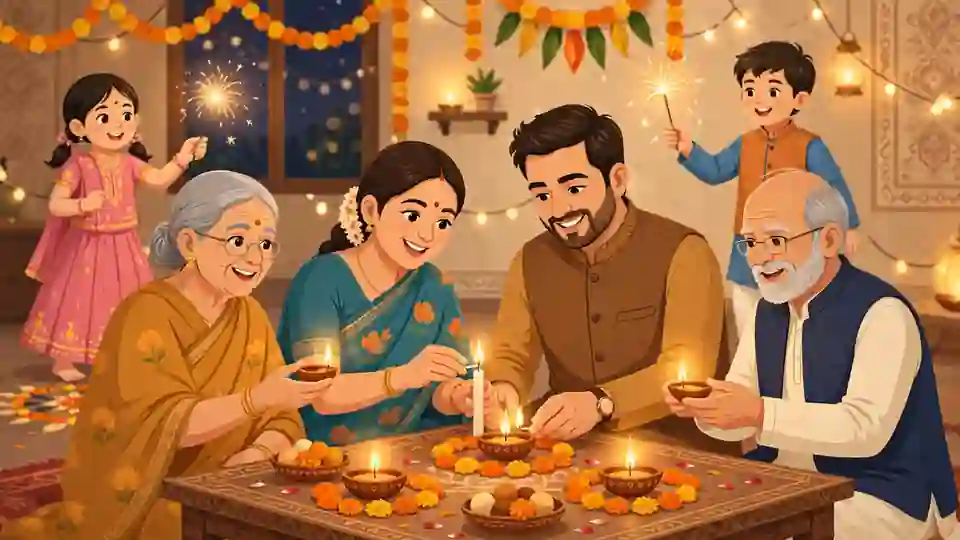
Maybe you grew up watching Diwali from the sidelines, or you have moved into your own home and this is the first festival that is truly yours to celebrate. Either way, the idea of “doing Diwali properly” can feel intimidating — the rituals, the cooking, the guests, the sheer number of things everyone else seems to know. Relax. Diwali at its heart is simple: light over darkness, family together, and a home full of warmth. This guide takes you from complete beginner to confident host, covering what the festival means, how to prepare, the essential rituals, food, guests and the practical details nobody tells you. No prior knowledge assumed, no judgement — just a clear, practical path to a Diwali you will genuinely enjoy with the people you love.
What Diwali Is Really About
Diwali, the festival of lights, is celebrated by millions across India and the world, most commonly marking the return of Lord Rama to Ayodhya — the victory of light over darkness and good over evil. Different regions and communities attach their own stories and customs: Lakshmi Puja for prosperity, Kali Puja in Bengal, Bandi Chhor Divas in Sikh tradition, and New Year celebrations in Gujarat. You do not need to master every tradition — what matters is understanding that Diwali is fundamentally a home festival. The lamps you light, the food you share and the people you gather are the celebration. Everything in this guide serves that simple purpose, and every suggestion can be adapted to your family’s own customs.
Getting Your Home Ready: The Basics
Traditional Diwali preparation begins with a thorough cleaning — and this is practical, not just symbolic. Declutter each room, dust the neglected corners, wash curtains and bedding, and clear the entrance. Then handle repairs you have been postponing: the fused bulb, the dripping tap, the wobbly shelf. A clean, working home is the foundation everything festive builds on. While cleaning, set aside old clothes and usable items for donation — giving before the festival is a beloved tradition and declutters beautifully. For the decorative layer — diyas, rangoli, lights and flowers — a step-by-step budget decorating guide walks you through it without overspending.
The Essential Rituals, Explained Simply
You do not need an elaborate ceremony. The core rituals most families follow are: lighting diyas at dusk — oil lamps placed at the entrance, windows and puja space, symbolising the driving away of darkness; Lakshmi Puja, a short prayer to the goddess of prosperity, usually done in the evening with the family gathered; and exchanging greetings and sweets with family, neighbours and friends. If you are unsure of the prayers, a simple aarti with a diya, flowers and sincere intention is completely sufficient — sincerity matters more than perfection. Ask an elder in the family to guide you the first time; most are delighted to be asked.
Food: What to Make, What to Buy
Festive food is half the joy of Diwali, and planning it early removes most of the stress. Plan a special meal for the main day — it need not be elaborate; one or two festive dishes beyond your everyday cooking feel celebratory, especially if you involve family members in the preparation. For sweets, decide your approach early: homemade versus store-bought is a genuine choice, and a mix works beautifully. Stock snacks for unexpected guests — namkeen, dry fruits, and a few sweets in airtight containers. If you are hosting dinner, cook what you can confidently make well rather than attempting an ambitious new recipe under pressure; guests remember warmth and abundance, not culinary daring. And keep one simple truth in mind: nobody has ever complained about too much mithai.
Gifts, Guests and the Social Side
Diwali is deeply social — neighbours drop by, relatives call, colleagues exchange wishes. Prepare a small stock of gifts for unexpected visitors: a few extra boxes of sweets or dry fruits kept aside saves embarrassment. For planned gifting, thoughtful budget gift ideas keep you generous without stress. When guests visit, the essentials are a warm welcome, something sweet to eat, and unhurried time — not a perfect house. If you are the guest, carry something small; even a box of sweets says you honour the occasion. And pace yourself socially: it is fine to keep some evenings just for immediate family. Rest is part of the festival too.
Firecrackers, Lights and Celebrating Responsibly
Firecrackers are traditional in many families — and increasingly restricted in many cities for air quality and safety reasons. Check your local rules before buying any; many areas now limit bursting to specific hours or ban certain types. If your family enjoys them, follow proper safety practices strictly, especially with children. An equally joyful alternative that more families are choosing: focus the celebration on diyas, lights and togetherness rather than noise. There is no single right way — but whatever you choose, keep it safe, legal and considerate of neighbours, pets and the elderly.
Common Beginner Mistakes
First-timers usually err in predictable ways. Trying to do everything — elaborate cooking plus decoration plus hosting plus rituals — leads to exhaustion, not joy; pick your priorities and let the rest be simple. Overspending on the first Diwali in your own home is common; decorations and utensils accumulate over years, so buy the basics now and add one or two special pieces each year. Copying someone else’s traditions rigidly instead of building your own comfortable version; it is your festival too, and blended families can happily mix customs. Leaving everything to the last day guarantees stress — spread preparation across the preceding week, keeping the final day for joy, not chores. And forgetting to enjoy it: step back at some point on Diwali evening, look at your lit home, and simply take it in. That moment is the whole point.
Frequently Asked Questions
Which day is the main Diwali day?
Diwali spans five days, with the third day — Lakshmi Puja, the new moon night — being the main celebration. Dates shift each year with the lunar calendar, so check a reliable panchang or calendar for the current year.
Do I need to do the full puja if I am unsure?
No. A simple diya lighting, a moment of gratitude with family, and sharing sweets is a complete and meaningful celebration. Add more ritual as you learn and feel comfortable.
How do I celebrate if I live alone or far from family?
Light diyas, cook one festive dish, video-call family during their celebrations, and invite a friend or neighbour over. Many people away from home build beautiful Diwali traditions with friends — the festival adapts.
Is it okay to skip firecrackers entirely?
Absolutely. Plenty of families celebrate a cracker-free Diwali focused on lights, food and togetherness — it is increasingly common and completely respectable.
How far in advance should I start preparing?
Start light cleaning and planning two weeks ahead, do the heavy preparation in the final week, and keep the last two days for cooking, decorating and rest. A little planning removes nearly all festival stress.