
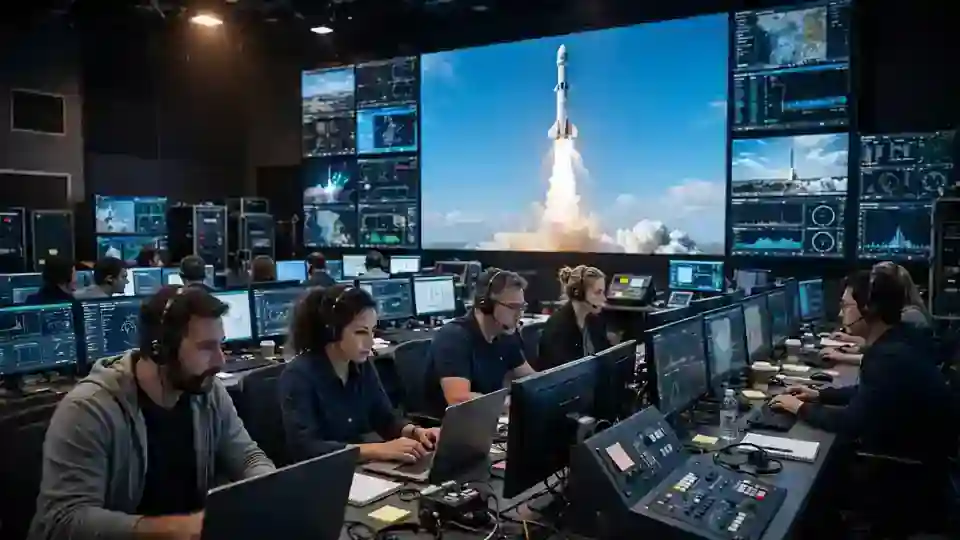
The camera always zooms in on the astronaut. Millions watch the wave from the capsule and think that job belongs to someone else — a superhuman with perfect genes and impossible luck. What the broadcast never shows are the hundreds of specialists who spent years making that two-minute wave possible: the engineers who tuned the engines, the scientists who chose the destination, the controllers who watched every telemetry blip from a windowless room.
Here is the honest truth: astronaut selection is extraordinarily competitive, with only a handful picked per round. But behind every astronaut is an industry of people who design, build, launch, and study spacecraft — real, varied jobs far more reachable than most students realise. Below are ten such career paths: what each involves day to day, who it suits, and one honest downside each. For a concrete action plan, see how to prepare for a career in the space industry, step by step.
1. Aerospace engineer
Aerospace engineers design the bones of everything that flies — airframes, satellite structures, launch vehicle stages, and the systems holding them together under brutal forces. It suits people who genuinely enjoy maths and physics and like seeing calculations become physical objects. The honest downside: the work moves slowly. Projects run on timelines of years with heavy documentation, so anyone craving fast feedback can find the pace frustrating.
2. Astrophysicist or planetary scientist
These researchers study stars, galaxies, black holes, and other worlds using telescope and spacecraft data. Their days involve data analysis, writing papers, and fierce but polite debates about what the evidence means. It suits the deeply curious who never stopped asking why. The honest downside: this is one of the longest educational roads here, usually requiring a doctorate, and academic positions are genuinely scarce.
3. Propulsion engineer
Propulsion engineers work on rocket engines — the violent heart of every launch — dealing with thermodynamics, fluid flow, and materials surviving temperatures that melt most metals. It suits hands-on problem solvers who find controlled explosions exciting rather than frightening. The honest downside: test failures are loud, expensive, and public, and work concentrates at test sites and launch facilities, limiting where you can live.
4. Mission operations specialist
When a satellite is in orbit, someone has to watch it. Mission operations specialists — sometimes called flight controllers — monitor telemetry, plan manoeuvres, and respond when things go wrong. It suits calm, procedure-driven people who stay clear-headed under pressure and enjoy checklists. The honest downside: spacecraft do not keep office hours, so shift work, nights, and holidays during critical phases are part of the deal, and quiet stretches between events can feel monotonous.
5. Satellite data analyst
Earth-observation satellites produce staggering data volumes, and analysts turn them into crop forecasts, flood maps, and deforestation tracking. The work blends programming with domain science and has one of the clearest real-world impacts here. It suits people who like code but want it to mean something beyond a screen. The honest downside: much of the job is desk-bound data cleaning — expect spreadsheets, scripts, and GIS software, not launch pads.
6. Robotics engineer
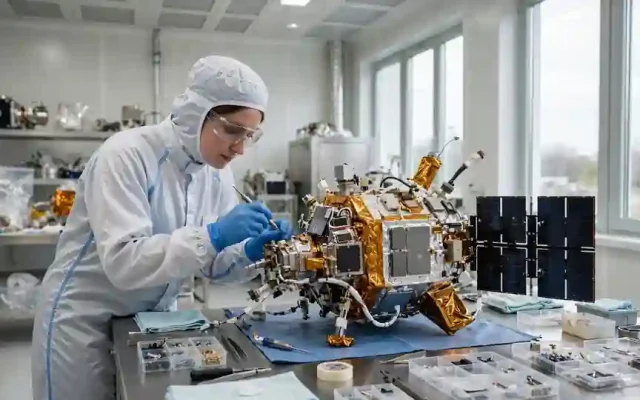
Robotic arms assemble spacecraft, rovers crawl across Mars, and autonomous systems dock vehicles in orbit. Robotics engineers blend mechanical design, electronics, and software into machines that work where humans cannot go. It suits builders who tinker, prototype, and learn by breaking things. The honest downside: development cycles are painfully long — years from sketch to flight — and testing is methodical to the point of tedium.
7. Space software engineer
Every spacecraft runs on software, and every ground station processes data through software. Engineers here write flight code, telemetry pipelines, and operator tools — demand is strong because every space organisation is ultimately a software organisation with rockets attached. It suits coders who take pride in reliability. The honest downside: reliability standards are extreme, with review and testing at a level that feels glacial to anyone used to shipping fast. There is no “move fast and break things” in orbit.
8. Materials scientist
Spacecraft need materials lighter than aluminium and stronger than steel that survive radiation, vacuum, and thousand-degree swings. Materials scientists develop heat-shield tiles, composites, and new alloys in laboratories. It suits chemistry-and-physics minds who enjoy slow, careful experimental work. The honest downside: progress is incremental and invisible — years improving one property by a few percent, with recognition slow to come, if at all.
9. Space policy analyst
As satellites and companies crowd into orbit, someone writes the rules: launch licensing, debris management, frequency rights, and old treaties applied to a commercial era. Policy analysts work for agencies, think tanks, and companies. It suits strong writers and debaters fascinated by how big systems get governed. The honest downside: a genuinely niche field with few entry-level openings, usually needing a law or policy degree plus heavy networking — and more documents than rockets.
10. Science communicator
Someone has to explain all of this to the rest of us. Science communicators write articles, produce videos, run planetarium shows, and manage outreach — they are why the public cares about missions. It suits natural storytellers who translate technical ideas without dumbing them down. The honest downside: pay is typically lower than engineering roles, much work is freelance with uneven income, and you need real subject knowledge — enthusiasm alone does not survive long.
What to consider before committing to a space career
Start with the honest overlap between what you enjoy and what you are actually good at. Space careers reward depth: pick the lane that matches your natural strengths — maths, writing, building, analysing — rather than the one that sounds most impressive at a dinner party. Next, look at the education runway with clear eyes. Some paths need a doctorate, others need a solid bachelor’s plus projects, and the difference matters when you are choosing what to study now. Our complete beginner’s guide to space careers in India walks through the qualification routes in detail.
Also consider where you want to work. The public-versus-private choice shapes everything from pay structure to pace, and our comparison of ISRO and private space companies lays out the trade-offs honestly. Finally, test the waters cheaply: join a rocketry or astronomy club, build a small satellite-tracking project, or intern at a space-adjacent company before committing years to a specialisation. And if you are still in school, these tips for students dreaming of a career in space science will help you build the right foundation early.
The bottom line
The astronaut gets the photograph, but the industry runs on engineers, scientists, operators, analysts, and communicators — and it needs more of all of them. Pick the path that fits how your mind actually works, accept the honest downside that comes with it, and start building proof of your skills long before you need a job. Space is a team effort in the most literal sense; there is almost certainly a seat on that team with your name on it.



One Comment