
Your hallway cupboard will not close, the kitchen counter has become a shelf, and every drawer is a small mystery. Small homes do not fail because they are small. They fail because things have no fixed place, so everything ends up wherever it was last dropped. This list is for renters, flat-sharers, and anyone in a compact home who wants storage that works in daily life, not just in a photo. The ideas below were chosen for three simple reasons: they use space you already have, they need no major renovation, and they stay useful after the first tidy weekend. Prices vary a lot by brand, material, and region, so check current prices before buying anything.
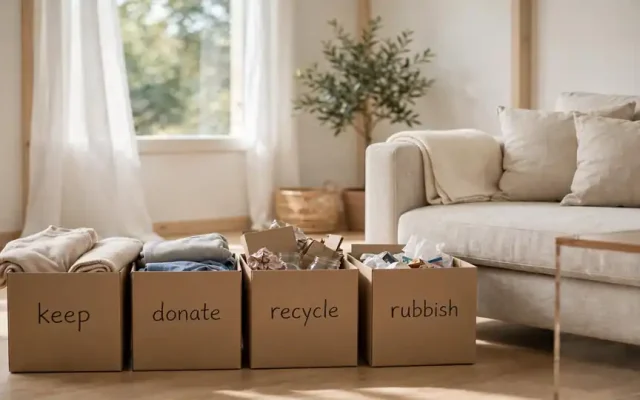
Start with one honest rule: storage cannot fix too much stuff. If a cupboard is packed solid, sort it before you buy a single box. Our step-by-step guide on how to declutter your home room by room pairs well with this list, because the best container is useless if it is only hiding clutter more neatly.
The Storage Ideas That Earn Their Space
1. Under-Bed Boxes With Lids
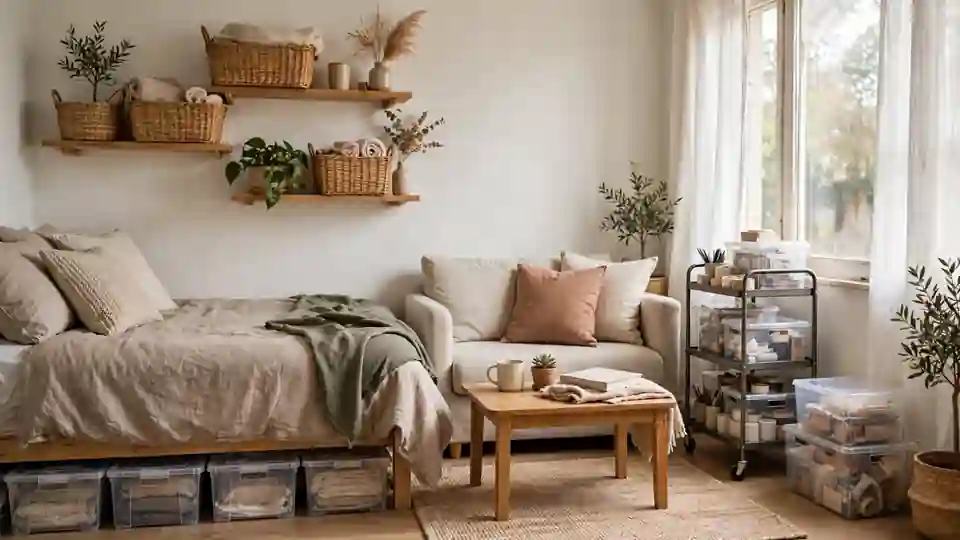
The space under a bed is often the largest unused storage area in a small home. Low, lidded boxes suit out-of-season clothes, spare bedding, and shoes you wear rarely. Lids matter because they keep dust off and let you stack two shallow boxes if the frame allows. The honest downside is access: you will not want daily items down there, because pulling boxes out gets tedious fast. Choose clear sides or label each end clearly, so you can find things without opening every box on a busy morning.
2. Over-Door Hooks and Organisers
The back of a door is free vertical space that most homes ignore. A sturdy over-door rack holds coats, bags, towels, or cleaning tools without drilling, which makes it ideal for renters. Hook-style racks are stronger for heavy items, while pocket organisers suit small things like gloves, chargers, and toiletries. Check that the door still closes fully and that hooks do not scratch the frame. The downside is visual: a loaded door can look busy, and cheap thin racks rattle.
3. Stackable Clear Boxes in Cupboards
Cupboards waste space when items sit in one layer with air above them. Stackable boxes turn that air into a second or third layer, and clear sides mean you can see contents at a glance. Use them for dry food, craft supplies, cables, or bathroom spares, grouped by job rather than by where they happened to land. Square shapes waste less space than round tubs. The downside is cost if you buy many at once, and lids can crack on the cheapest sets. Buy a few, test the size in your cupboard, then repeat the same size so stacks stay stable.
4. A Rolling Cart for Awkward Gaps
Many kitchens and bathrooms have a narrow gap beside the fridge, washing machine, or sink unit that fits nothing standard. A slim rolling cart turns that dead strip into shelves for bottles, jars, or cleaning supplies, and it pulls out so nothing gets lost at the back. Measure the gap carefully, including skirting boards, before ordering. The honest downside is stability: tall, narrow carts wobble if overloaded, and small wheels struggle on uneven floors.
5. Furniture That Stores as Well as It Sits
In a small living room, every large item should ideally do two jobs. A storage ottoman holds blankets and doubles as a footrest or extra seat. A coffee table with a shelf or drawers swallows remotes, magazines, and chargers. This idea suits people replacing furniture anyway, because buying new pieces purely for storage gets expensive quickly. The downside is that hidden storage becomes a junk drawer if you never sort it. Give each piece one category, and review it when the seasons change.
6. Wall Shelves Above Eye Level
The band of wall above doors, desks, and sofas is rarely used, yet it is perfect for books, baskets, and items you need monthly rather than daily. A single shelf running along one wall can free an entire cupboard. Use baskets on the shelf so small items look calm and stay grouped. The downside is dust and reach — you will need a small step stool, and open shelves show clutter quickly if you skip the baskets.
7. Drawer Dividers and Small Trays
Most drawers fail not from size but from chaos inside. Simple dividers or small trays give cutlery, underwear, tools, and stationery their own lanes, so one rummage does not undo the whole drawer. This is one of the cheapest ideas on this list and one of the fastest to set up. Measure before buying, because dividers that almost fit are worse than none. The downside is that dividers cannot create space; an overstuffed drawer stays overstuffed.
8. Vacuum Storage Bags for Bulky Textiles
Duvets, winter coats, and spare blankets take up shocking amounts of air. Vacuum bags shrink them down so a season’s worth fits on one shelf or under the bed. They are especially useful in homes without a loft or spare room. Follow the filling line and do not overpack, or the seal fails. The honest downside is that fabrics come out creased and need airing, and sharp zips or buttons can puncture thinner bags.
9. Labels on Everything You Cannot See Into
Labels sound dull until you have opened four identical boxes looking for batteries. A label on every opaque box, basket, and bag turns searching into reading. Plain tape and a marker work fine; you do not need a special machine. The downside is tiny but real: labels need updating when contents change, or they start lying to you. Pair this with the approach in our complete beginner’s guide to organizing a small apartment and your system stays honest.
10. A Landing Strip by the Front Door
Clutter spreads from the front door inward. A small, defined landing strip — a hook for keys, a tray for post, a basket for bags — stops daily items before they colonise the whole home. This suits every home size, and it costs almost nothing to set up with items you already own. The downside is discipline. A landing strip only works if everyone in the home uses it, so agree the spots together rather than announcing rules nobody follows.
How to Choose Storage That Actually Fits Your Life
Measure first, buy second. Write down the exact width, depth, and height of the space, and keep the numbers on your phone for when you shop. Second, store by frequency: daily items within easy reach, weekly items in cupboards, seasonal items in the hardest spots. Third, prefer one consistent box size per cupboard so stacking works. If you are still unsure which method suits your temperament, our comparison of KonMari vs room-by-room decluttering helps you decide how ruthless to be before you organise. Finally, add storage slowly, one problem area at a time, and live with each fix for a week before buying the next thing.
The Short Verdict
You do not need a bigger home; you need fewer homeless objects. Start with under-bed boxes, drawer dividers, and a landing strip — the cheapest trio with the biggest daily payoff — then add shelves and carts only where a real gap remains. Sort before you store, label what you cannot see, and let each new purchase prove it solves a problem you actually have.

One Comment