
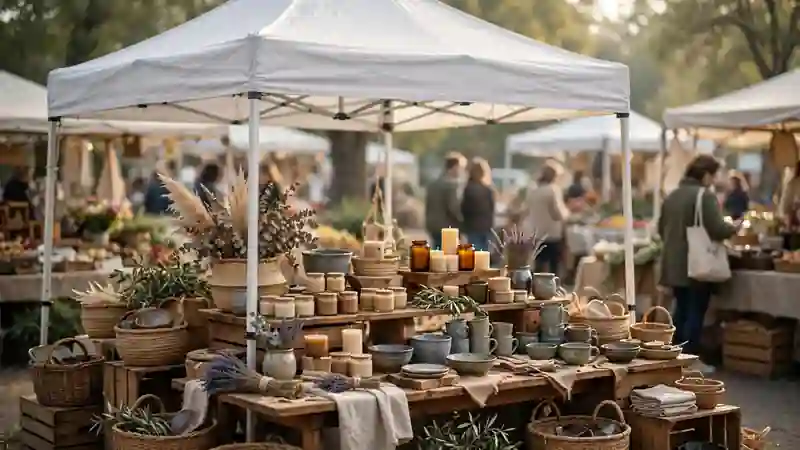
Saturday morning, 6:45 AM. You’re sitting in your car behind a folding table covered in handmade candles, hands shaking slightly, wondering if anyone will stop at your booth. Three hours later, you’ve sold half your stock, a stranger asked for your Instagram, and another vendor invited you to next weekend’s market. That first market day is nerve-wracking — but it’s also the fastest education a craft seller can get.
Farmers markets have quietly become one of the best places to launch a craft business. Shoppers arrive ready to spend and want to buy from a real person. No shipping costs, no algorithm, no competing with mass-produced listings — just you, your work, and a crowd already looking for something handmade. This guide covers market selection, booth setup, pricing, and the mistakes that separate a profitable Saturday from an expensive hobby.
Why Farmers Markets Beat Online for Brand-New Craft Sellers
Online marketplaces have their place, but a farmers market gives a beginner three things no website can. First, instant feedback. You watch a stranger pick up your candle, sniff it, check the price, and put it back — that’s data. One market day reveals which products stop traffic and which are invisible.
Second, impulse buyers. Market shoppers arrive in a spending mood with cards ready. A beautiful display can turn a passerby into a customer in thirty seconds — no scrolling, no searching, no second-guessing.
Third, relationships. Regular shoppers become regular customers. They ask when your new seasonal scent arrives, bring friends next week, and follow you wherever you sell next. The market isn’t just a sales channel — it’s a launchpad for everything that follows.
Picking the Right Market: 5 Questions to Ask Before You Apply
Visit candidate markets as a shopper first, and answer these before you apply:
- Who shops here? Match the market to your price point. A $45 hand-poured candle sells at a curated artisan market; it’s a tough sell next to $3 sweet corn.
- What do the fees include? Typical fees run $25–$75 for a day. Ask whether that covers a table, tent, and electricity — or just a patch of grass.
- How many craft vendors sell what you make? Some markets cap candle or jewelry vendors. Ask the organizer — they’d rather tell you “we’re full on soap” than watch you fail.
- Where’s the foot traffic? Walk the market at opening and near closing. Note which booths draw crowds and where the dead zones are.
- What are the rules? Markets regulate handmade-only requirements, tent weights, and cleanup. A few require liability insurance ($50–$100/year). Getting ejected for a missed rule is an expensive lesson.
The First-Timer’s Booth Setup: Essentials Only
Forget the boutique-storefront booths you see on social media. Your first booth needs to be clean, shoppable, and windproof:
- A 10×10 pop-up tent with proper weights. Not stakes — most markets forbid them. A flying tent can hurt someone and end your market career on day one.
- One or two folding tables with a clean, wrinkle-free tablecloth reaching the floor. Under-table storage hides restock boxes.
- Height variation. A flat table is invisible from six feet away. Stack crates, use risers, lean frames — give shoppers a reason to walk closer.
- Clear price tags on everything. Shoppers hate asking “how much?” — many just keep walking. Big, legible tags are one of the highest-return improvements you can make.
- A card reader. Most customers pay by card; a simple mobile reader costs nothing upfront.
- Bags and a business card. A paper bag with your card inside makes the purchase feel finished and markets you after they leave.
One trick that costs almost nothing: make something at your booth. Even simple assembly draws a crowd, and a small crowd draws a bigger one. A short art timelapse of your craft being made becomes social content that brings people back next time.
Real Numbers: What First-Timers Actually Earn (and Spend)
Honest math: a typical beginner at a mid-sized market sells $150–$500 on a good day, with $200–$300 the most common first-timer range. Exceptional days top $800; slow days land under $100.
Costs: a one-time setup (tent, tables, weights, cloth, props, reader) runs roughly $200–$400 on a budget. Per-market costs — booth fee ($25–$75), materials, gas — should stay under 25% of sales so the day is genuinely profitable.
The real leverage is repetition. By your fifth or sixth market you know your bestsellers, price confidently, and recognize regulars. Treat markets one through three as paid education — profits compound from there.
6 Mistakes That Sink First-Time Market Vendors
- Too much variety, too little depth. Twenty products with two units each looks sparse. Pick five bestsellers and bring deep stock.
- No price tags. Unmarked prices kill impulse sales. Tag everything.
- Sitting on your phone. Stand, smile, greet people. A simple “let me know if you want to smell anything” outsells scrolling every time.
- Pricing from the heart. If your candle costs $6 to make and sells for $12, you’re working for almost nothing. Price for profit: materials + fees + your time.
- No weather plan. Wind, sun, and surprise rain ruin products and moods. Bring sunscreen, water, a jacket, and inventory protection.
- No follow-up path. A signup sheet or QR code to your shop (“10% off your next order”) turns a Saturday customer into a year-round one.
Your 4-Week Game Plan Before Market Day
Week 1 — Research and apply. Visit two or three markets as a shopper. Pick one, read the vendor packet, apply. Order your tent, weights, and tables now.
Week 2 — Build inventory. Choose your five hero products and make deep stock — enough to fill your display twice over. Photograph everything for social posts. A product commercial style phone shoot doubles as marketing material.
Week 3 — Price and prep. Finalize pricing, print tags, order bags and cards, set up your card reader. Do a mock setup at home — you’ll find what’s missing while you can still fix it.
Week 4 — Promote and pack. Post that you’ll be at the market. Pack the night before: tent, weights, tables, cloth, products, tags, bags, cards, reader, cash float, snacks, water, sunscreen. Arrive an hour early — setup always takes longer than you think.
Keep Reading
- Cake Decorating Video AI Prompt — short video ideas that show off edible crafts beautifully
- DIY Craft Video AI Prompt — turn your making process into content that drives booth traffic
- Gardening Video AI Prompt — perfect if your crafts have a botanical or natural angle
- Festival Style AI Photo Prompt — eye-catching photo styles for market-day social posts
Quick Answers About Selling Crafts at Farmers Markets
Do I need a business license? It depends on your location and product. Many markets let hobby sellers start with just the vendor application, but food and cosmetics often need extra permits. Ask your organizer.
How much inventory should a first-timer bring? Enough to look full with backup underneath — usually 30–80 units across five hero products. Selling out is great marketing; overstocking what doesn’t move is not.
Cash or card? Cards, overwhelmingly. Bring a mobile reader and a small cash float ($40–$60 in small bills). Vendors who accept cards see noticeably more sales.
What if it rains? Markets usually run rain or shine. Bring tent sidewalls, plastic bins, and towels. The shoppers who show up on drizzly days are serious buyers — some vendors report their best conversion rates then.
A first farmers market won’t make you rich in a day. But it will teach you more about your customers in six hours than six months of guessing online. Pick a market, build a clean booth, price for profit, and show up ready to talk to people.