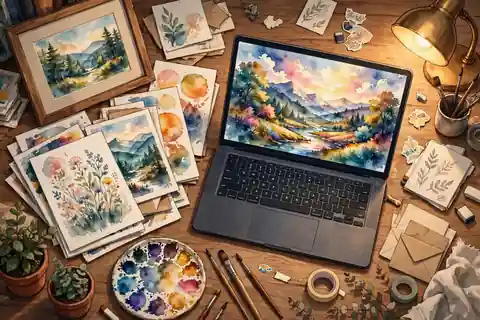
Last month, a college student from Jaipur sold her first AI-generated poster on Etsy — a dreamy watercolor of an Indian street market at dusk. Eleven minutes to create, priced at $6 as a digital download. By the end of the week, forty strangers had bought it. That single image earned her more than her part-time tutoring shift.
Stories like that are why selling AI-generated art has exploded as a side hustle. But the hype posts skip the real story: the people making money aren’t uploading random prompts. They treat it like a small business — picking a niche, learning what buyers want, and publishing consistently. Here’s exactly how to do that, from your first image to your first payout.
What Buyers Actually Pay For
Nobody buys “AI art” because it’s made by AI. They buy it because it solves a problem: a café owner needs affordable wall art, a blogger needs a featured image that doesn’t look like stock, a gamer wants a custom character portrait.
The best sellers fall into clear buckets: printable wall art (boho, japandi, vintage aesthetics), niche illustrations (astrology charts, pet portraits, nursery prints), commercial-use graphics (backgrounds, textures, social media templates), and custom commissions (personalized portraits and gifts). Notice what’s missing? Generic “glowing-eyed fantasy woman” art — that market is flooded, and flooded means $1 price tags.
Your edge is specificity. Watercolor-style AI images sell well as nursery and wedding décor. Renaissance-style portraits are popular personalized gifts. The narrower your lane, the less competition and the higher your prices.
Pick Your Money-Making Style
Five proven models — pick one to start, add more later.
1. Digital downloads on Etsy. Sell the file; the buyer prints it. No inventory, no shipping, nearly pure profit after fees. Best for wall art, planners, invitations. Cost: about $0.20 per listing.
2. Print-on-demand. Redbubble, TeeSpring, and Printful put your designs on shirts, mugs, and posters, handling printing and shipping. Thin margins per sale, but zero customer-service headaches.
3. Stock marketplaces. Adobe Stock accepts labeled AI images. Small royalties per sale, but a large portfolio compounds into genuine passive income.
4. Custom commissions. Personalized pieces via Fiverr or Instagram — pet portraits, couple illustrations, logos. Highest per-piece earnings ($25–$200+), but real deadlines and revisions.
5. Your own shop. Gumroad or your own site keeps almost 100% of each sale. More setup work, but no platform can suspend you overnight.
For beginners, Etsy digital downloads plus one print-on-demand store is the sweet spot: low cost, low risk, and you’ll learn what sells within weeks.
The Tools You Need (and What to Skip)
You need three things: a generator, a basic editor, and a sales channel. Midjourney still leads on artistic quality; free options like Microsoft Designer and Stable Diffusion are surprisingly capable for commercial styles. Start free — upgrade only when a tool clearly limits your sales.
For editing, Photopea or Canva handle 90% of sellers’ needs: upscaling, fixing AI glitches (six-fingered hands, anyone?), adding text, and creating mockups. Mockups matter enormously — listings showing art framed on a wall convert far better than raw images.
Skip the expensive “AI art business” courses, premium prompt packs, and automation tools promising a hands-free shop. Winners succeed on taste and consistency, not secret software.
Where to Sell: A Platform Rundown
Etsy is the top beginner choice — huge search demand for printable art and trusted buyers. Fees take roughly 10–12% total, and competition is real, but nothing beats it for learning what sells fast.
Redbubble / TeeSpring / Society6 are the easiest print-on-demand entries. Upload once; your design appears on dozens of products. Margins run $2–$5 per sale, so volume and trend awareness matter.
Adobe Stock is the passive-income play. AI images must be labeled, quality standards are strict, but approved images can sell for years. Contributors with 1,000+ quality images report meaningful monthly payouts.
Fiverr and Instagram are where custom work lives. Pop-art style portraits and anime-style character art are commission magnets. Build a portfolio of 10–15 samples before launching your gig.
Gumroad / your own site shines once you have even a small audience. Bundle 50 themed images as a creator pack for $15–$30 — creators happily pay for commercial-use bundles they can’t find on stock sites.
Honest Numbers: What You’ll Actually Earn
Month one, expect $0. The first 30 days are for learning — what sells, how listings work, which titles buyers search. Sellers who publish 20–50 quality listings typically see first sales in weeks two to six.
Realistic milestones: $50–$200/month by month three with 50+ focused listings. $500+/month by month six to twelve if you keep publishing and double down on winners. The top few percent clear thousands monthly — but they got there over a year or more of steady work, and they’re the exception.
This isn’t “upload 10 images and retire” money. It’s a real micro-business. Treat it like one and it can pay like one.
Beginner Mistakes That Kill AI Art Shops
Ignoring each platform’s AI rules. Etsy requires disclosure on some AI products, Adobe Stock mandates generative-AI labeling, and a few marketplaces ban AI content outright. Read the policy page before uploading anything — violations mean removed listings or closed accounts.
Selling what everyone sells. If 10,000 shops sell “motivational quote art,” yours won’t stand out. Pencil-sketch memorial portraits or vintage travel posters for obscure small towns have buyers and a fraction of the competition.
Weak titles and tags. “Beautiful AI art print” ranks for nothing. “Watercolor wildflower nursery wall art, sage green botanical printable” matches what people actually type. Study bestsellers’ titles in your niche and learn their keyword patterns.
Skipping the legal basics. Check your generator’s commercial-use terms (free tiers sometimes restrict it). Don’t sell art mimicking living artists’ styles, and never use trademarked characters — “inspired by” a famous franchise is still infringement when money changes hands.
How to Stand Out When Thousands Compete
Bundle instead of listing singles: a “set of 6 matching prints” at $12 outsells six $4 singles because it solves the buyer’s whole wall at once. Publish seasonal collections two months early — Christmas art goes live by October. And build an email list from day one: past buyers are your cheapest future sales, and no platform can take that list away.
Most importantly, develop a recognizable style. Lasting sellers aren’t trend-chasers — they’re the ones whose work a buyer can spot in a crowded search page. Master two or three aesthetics deeply and become known for something specific.
Keep Reading
- Sugar Skull AI Photo Prompt: Día de los Muertos Art That Sells as Seasonal Prints
- Van Gogh AI Photo Prompt: Starry-Night Style Images for Your Art Shop
- Wes Anderson AI Photo Prompt: Symmetrical Pastel Art Buyers Love
- Fairy Tale Royalty AI Photo Prompt: Magical Portraits for Custom Commissions
Frequently Asked Questions
Is it legal to sell AI-generated art?
Generally yes, but details matter. Most paid generator tiers grant commercial rights; some free tiers don’t. In the US and several other countries you currently can’t copyright purely AI-made images, meaning others could theoretically reuse them. Understand this before scaling.
Must I tell buyers it’s AI-generated?
Some platforms require it; everywhere else it’s simply good practice. Most buyers don’t care how art was made as long as it looks great. Getting caught hiding it is far worse than disclosing it upfront.
How much does it cost to start?
As little as $5–$20 for listing fees and maybe one month of a generator subscription. The real investment is time: expect 20–40 hours of research and listing creation before meaningful sales arrive.
Can I compete with thousands of sellers?
Yes — by niching down. “AI wall art” is impossibly crowded; “watercolor birth-flower prints for new moms” is a lane you can own. Specificity beats volume when you’re starting out.