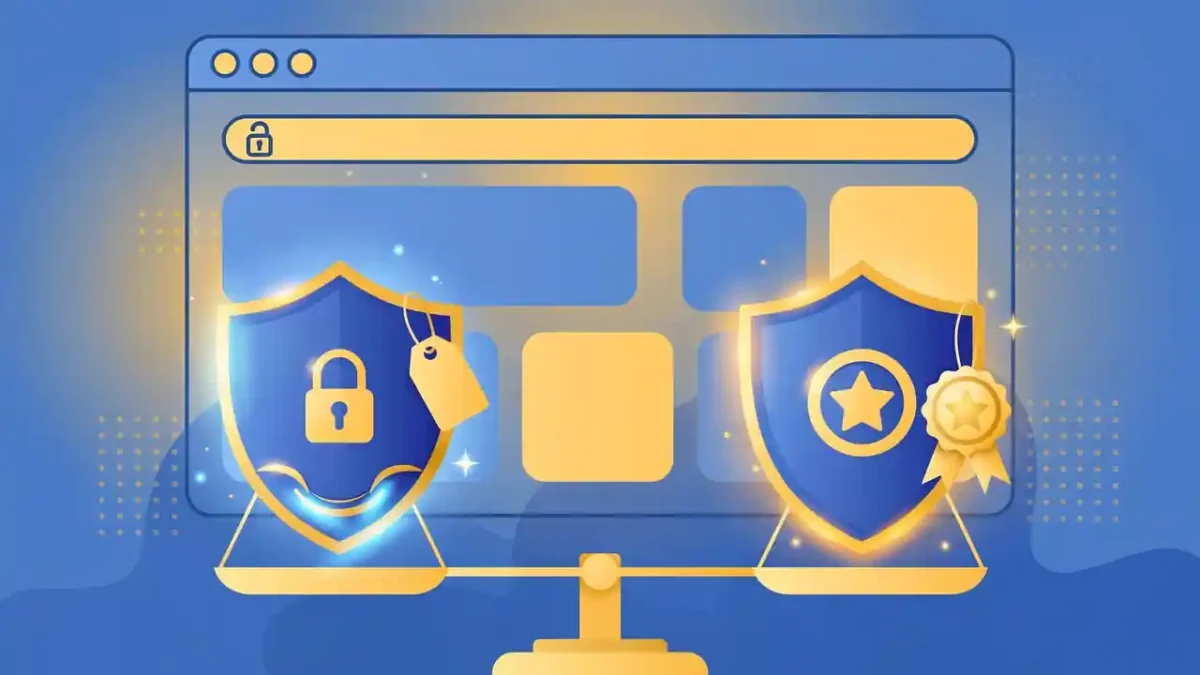
Every website needs an SSL certificate — browsers now flag sites without one as “Not secure,” and visitors have learned to run from that label. But when you go to get one, you face a confusing choice: free certificates that take minutes to install, or paid ones costing anywhere from a few dollars to hundreds per year. Sales pages will tell you paid is always better; open-source advocates will tell you free is all anyone needs. Both are oversimplifying.
The real question is not which certificate is “better” in the abstract — it is which one matches what your site actually does. A personal blog and an online store taking card payments have genuinely different needs, and the honest answer differs for each. This comparison lays out both options plainly so you can decide with confidence instead of marketing pressure.
The quick verdict
For most blogs, portfolios, and small business sites, a free SSL certificate provides exactly the same encryption as a paid one — the padlock, the HTTPS, and the visitor trust all work identically. Paid certificates earn their keep when you need organization validation (proving your company is real), a warranty against issuance mistakes, dedicated support, or multi-domain management for larger setups. If your site handles payments or sensitive customer data, the validation and support of a paid certificate are worth serious consideration; for everything else, free is genuinely enough. The confusion is understandable: certificate sellers market paid options hard, while the free alternatives quietly do the same cryptographic job. What you are really deciding is how much trust infrastructure — identity verification, warranty, support — your site needs around that encryption. If you are still learning the basics, start with this beginner’s guide to website security and SSL certificates before deciding.
| Criteria | Free SSL | Paid SSL |
|---|---|---|
| Cost | Free, typically auto-renewed by your host or via services like Let’s Encrypt. Prices vary by provider for any add-ons, so check current pricing before committing to extras. | Paid per year, with prices varying widely by brand, validation level, and features — check current prices, as they change often and renewal rates may differ from first-year deals. |
| Encryption strength | Identical to paid certificates — the same encryption protects visitor data either way. There is no “weaker” free encryption. | Identical to free certificates. You are not buying stronger encryption; you are buying validation, warranty, and services around it. |
| Validation level | Domain validation only — proves you control the domain, nothing about who you are. | Ranges from domain validation up to organization and extended validation, which verify the actual business behind the site. |
| Issuance speed | Minutes, fully automated — often one click in your hosting panel. | Minutes for basic validation; days for organization or extended validation, since real business checks take time. |
| Warranty | None — if something goes wrong with issuance, there is no financial backing. | Includes a warranty payout if the certificate authority makes an issuance error that causes losses. Amounts vary by product. |
| Support | Community forums and documentation; your host may help with installation issues. | Dedicated support from the certificate provider, which matters when something breaks on a revenue-generating site. |
| Validity period | Short — typically around 90 days, renewed automatically. Fine when automation works; a hassle if it breaks silently. | Typically one year, so fewer renewals to manage and less risk of an expiry surprise. |
Free SSL: strengths and honest weaknesses
Free SSL’s greatest strength is that it removed every excuse for running an unencrypted site. The encryption is genuinely the same standard paid certificates use, issuance takes minutes, and most good hosts install and auto-renew it for you without you ever thinking about it. For blogs, portfolios, documentation sites, and small business brochure sites, free SSL is not a compromise — it is the rational choice, and security professionals will tell you the same. Many of the world’s largest websites rely on free certificates; the technology is an industry standard maintained by a nonprofit consortium, not a budget compromise. When your host offers one-click free SSL, you are getting the same padlock visitors see on major sites.
The honest weaknesses are about everything around the encryption. There is no validation of who you are — a phishing site gets the same free certificate you do, which is why visitors cannot use “has HTTPS” as proof of legitimacy. There is no warranty and no one to call at 2 AM when renewal automation silently breaks and your site starts showing warnings. And the short validity period means you are depending on automation working forever; when it fails, it fails publicly. For a hobby site that is a minor embarrassment; for a store it is lost sales.
Paid SSL: strengths and honest weaknesses
Paid SSL’s real value is trust infrastructure, not encryption. Organization and extended validation put your verified company details behind the certificate, which matters for sites where visitors need to know who they are dealing with — stores, financial services, healthcare, and any business handling sensitive data. The warranty provides financial backing against authority errors, dedicated support means real help during incidents, and one-year validity with management tools suits organizations running many domains.
The honest weakness is that much of what you pay for is invisible to visitors. Browsers no longer display the company name prominently for extended validation the way they once did, so the visual trust advantage has shrunk considerably. Where paid certificates still clearly win is operational: centralized dashboards for dozens of domains, longer validity reducing renewal risk, and a support team that answers when a misconfigured certificate is costing you sales by the hour. For a business, that operational safety net is often worth more than the certificate itself. Many small businesses buy expensive certificates expecting an SEO or conversion boost that does not materialize — Google cares that you have HTTPS, not what you paid for it. And for a simple blog, paid SSL is simply money spent on nothing your visitors will ever notice.
Choose free SSL if… / Choose paid SSL if…
Choose free SSL if you run a blog, portfolio, documentation site, or small business site that does not process payments directly; if your host offers one-click installation with auto-renewal; or if your budget is better spent on backups, updates, and content — the security measures that actually protect a small site. Free SSL plus good site hygiene beats an expensive certificate on a neglected site every time.
Choose paid SSL if you run an e-commerce store or handle sensitive customer data; if proving your organization’s identity matters to your visitors’ trust; if you manage multiple domains or subdomains and want centralized management; or if having dedicated support and a warranty helps you sleep at night. The cost is a business expense against real risk, not a luxury.
Whichever you choose, the certificate is only one layer. Pair it with the fundamentals in these website security tips every small site owner should follow, learn to check a certificate’s validity the way your visitors will, and keep this list of free tools to check website security bookmarked for regular checkups.