Picture this: it is 11 PM on a Tuesday, and your phone buzzes. Someone in another country just bought a t-shirt with a design you created in 20 minutes — a design you never printed, never packed, and never shipped. A company you have never spoken to prints it, ships it, and handles the customer. That is print-on-demand, and paired with AI-generated art, the whole model just got faster to start.
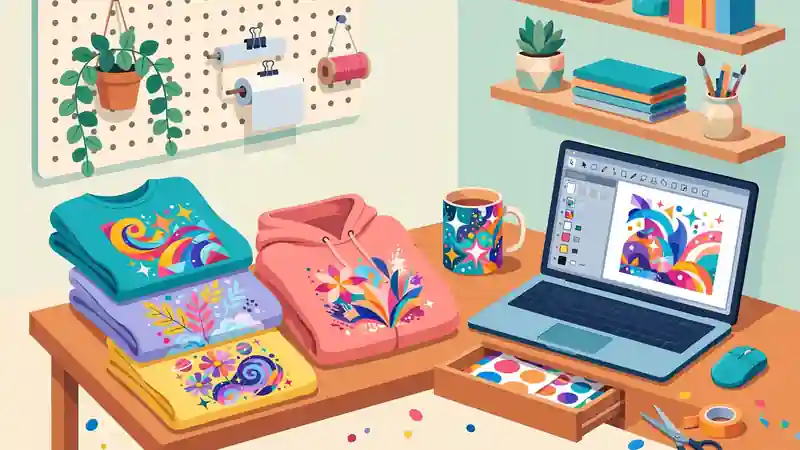
Print-on-demand (POD) means selling custom designs on products — t-shirts, hoodies, mugs, posters, phone cases — without holding any inventory. You upload a design; the POD company prints and ships it only when someone orders. Your job is just two things: create designs people want, and get them in front of buyers. AI image tools have removed the biggest bottleneck — you no longer need to be a designer to produce sellable artwork.
Why POD and AI Art Fit Together So Well
Traditional POD sellers spend hours in Photoshop or pay freelancers for every design. AI art generators flip that equation. In one evening you can produce dozens of variations in different styles — bold pop-art portraits, dreamy watercolor illustrations, gritty cyberpunk neon scenes, or nostalgic vintage posters — each appealing to a different buyer.
The economics favor you too: no inventory cost, no printer to buy, no boxes in your living room. Most platforms are free to join — they take a cut of each sale. Your real investment is time: learning what sells, generating designs, and writing listings that convert. The barrier to entry has never been lower, which is why the winners treat this like a real business, not a lottery ticket.
Your First Sale in 7 Steps
Step 1: Pick one niche, not ten. Money-making stores are focused: “funny designs for nurses,” “minimalist hiking posters,” “retro gaming tees.” Broad stores compete with everyone and win against no one — choose a niche you understand, because you will write descriptions in that buyer’s language.
Step 2: Research what already sells. Before generating a single image, spend an hour browsing your niche on Etsy, Amazon Merch, and Redbubble. Note which designs get the most reviews, which garment colors they use, and which phrases appear in titles. You are learning the visual language of what buyers already pay for.
Step 3: Generate designs with AI. The key skill is prompting: specific style words, a clear subject, and composition details like “centered design, plain background, t-shirt graphic style.” Generate in batches — aim for 20 to 30 designs in your first week. Cull ruthlessly and keep only the strongest.
Step 4: Prepare print-ready files. POD products need high-resolution files (usually 300 DPI, transparent PNG for apparel). Upscale your AI images, remove backgrounds where needed, and check every design on a mockup before publishing — a great design on a sloppy mockup will not sell.
Step 5: Choose your platform and upload. Marketplaces like Redbubble, Spring, and Merch by Amazon let you sell with zero audience of your own — they bring the traffic. Etsy gives you more control and higher margins but requires you to drive traffic through good SEO. Many sellers eventually do both.
Step 6: Write listings that sell. Your title, tags, and description sell while you sleep. Use the exact phrases buyers search for (“funny nurse t-shirt,” “minimalist mountain poster”). Say who the design is for and which occasions suit it — gifts, birthdays, holidays. Good listings turn 100 views with zero sales into 100 views with five sales.
Step 7: Publish consistently, then double down. Upload new designs weekly. After 30 to 60 days, check which ones get views and sales, then make more in those winning styles. Treat your first 50 designs as an experiment, not a verdict.
Where to Sell: The Best Platforms
Redbubble is the friendliest starting point. Free to join with a huge built-in audience; your design automatically goes on dozens of products. Margins are modest (around 20% markup), but the traffic is real and you learn fast.
Merch by Amazon puts your designs in front of Amazon’s shoppers. The catch: an application process and tier system — you start with a small design limit and earn more slots as you sell. Apply early.
Etsy + Printful/Printify is higher effort, higher reward. You run your own Etsy shop connected to a print provider and keep a bigger slice of each sale — but you handle customer service and drive your own traffic.
Real Numbers: What Can You Actually Earn?
The honest math: on Redbubble, a t-shirt sale might net you $2 to $5; on Etsy with your own pricing, the same shirt can net $8 to $15. Nobody gets rich from ten designs. Sellers earning $500 to $2,000 a month typically have 200 to 500 live designs, built over 6 to 12 months of steady uploading.
The encouraging part is compounding: designs uploaded eight months ago keep selling while you sleep. Seasonal designs spike hard — a festival-themed collection uploaded two months before the holiday can outsell your entire catalog in a month. Plan uploads around holidays, graduation season, and wedding season, and those spikes become predictable.
Mistakes That Kill New POD Stores
Uploading raw AI output. Straight-from-the-generator images often have artifacts, garbled text, or low resolution. Every design needs a cleanup pass: upscale it, fix flaws, and inspect it at full size before it goes live.
Ignoring trademark law. This is the big one. AI makes it easy to generate designs featuring celebrities, teams, cartoon characters, or brand logos — selling those can get your accounts banned and bring legal trouble. If you do not own the IP, do not sell it. Check the USPTO trademark database for any phrase or name you plan to use commercially.
Quitting at design number 30. Nearly every successful POD seller says their first 50 designs earned almost nothing. The data from those early uploads — which niches got views, which styles got clicks — guides the next 200 designs that actually make money.
How to Stand Out When Everyone Has the Same Tools
Your edge is taste and niche knowledge, not the tool. Generate 50 options, pick the 5 with real commercial appeal, and refine those. Learn which styles are oversaturated — generic motivational-quote-on-a-sunset designs — and zig where others zag.
Text-based designs still outsell complex art in many niches. A clever phrase in a great font, aimed at one specific profession or hobby, often beats a beautiful illustration. Pair simple AI-generated graphics with sharp copywriting and you have a formula that works across dozens of niches.
Finally, build an audience around your niche from day one — even a small Instagram or Pinterest account showcasing your designs. Marketplace algorithms change; your audience does not.
Frequently Asked Questions
Can I sell AI-generated designs commercially?
It depends on the tool’s terms. Most major generators grant commercial rights to paid subscribers, but terms change — read the current license. Always avoid trademarked characters, logos, or celebrity likenesses.
How many designs before I see sales?
Most sellers report their first sales between 30 and 100 live designs, usually within two to three months. Treat everything before that as paid learning.
Is print-on-demand too saturated in 2026?
The generic middle is saturated; specific niches are not. “Funny t-shirts” is saturated. “Funny t-shirts for left-handed beekeepers” is a business. Specificity is the entire game.
Keep Reading
- Pencil Sketch AI Photo Prompt — hand-drawn style artwork that works beautifully on posters and apparel
- Renaissance Oil Painting AI Photo Prompt — classical art styles that give merch a premium feel
- Superhero Comic AI Photo Prompt — bold comic-book aesthetics for standout t-shirt graphics
- Sugar Skull AI Photo Prompt — vibrant Día de los Muertos designs with proven merch appeal