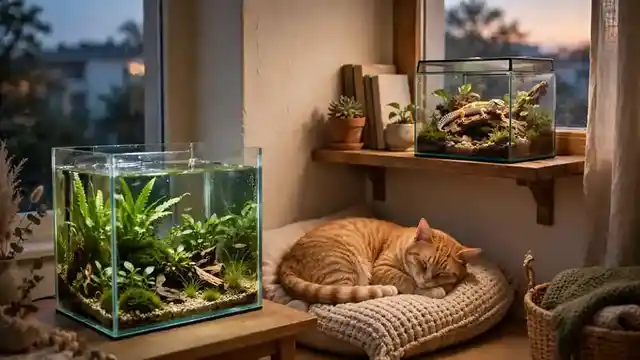
Busy people deserve honest wording first: low-maintenance does not mean no maintenance. Every pet needs daily attention, clean water, proper food, a suitable home and veterinary care when something is wrong. What low-maintenance really means is a pet whose care fits into short daily routines, who does not need hours of exercise or constant company, and who thrives in a small home. This list is for busy adults and small-space living. Items were chosen for manageable daily care, modest space needs and suitability for beginners, with the honest cost and downside of each stated plainly. Prices vary by region and species, so check current costs locally, and remember a vet’s advice beats a blog post every time.
Low-Maintenance Pets Worth Considering
1. Betta fish (kept properly, in a heated, filtered tank)
A single betta in a proper tank, not a tiny bowl, is quiet, beautiful and content alone, which suits busy owners and small flats. Daily care is feeding and a quick health glance; the real work is weekly partial water changes and maintaining the filter and heater. The honest downside is that the setup matters more than the fish: a proper tank costs more than people expect, and bettas are sensitive to poor water. Best for someone patient who enjoys a small routine and a living piece of calm.
2. A small group of community tropical fish
A modest tank of hardy community fish offers movement and colour with feeding once or twice a day and regular water care. Fish do not need walks, grooming or company in the human sense, which suits unpredictable schedules. The downside is that aquarium keeping is chemistry as much as pet keeping: cycling a new tank takes patience, and skipping water changes quietly harms them. Our beginner’s guide to a first aquarium explains the setup honestly before you spend anything.
3. Leopard gecko
Leopard geckos are calm, quiet, do not need a huge enclosure by reptile standards, and eat on a simple schedule of insects. They handle gentle interaction well and are active in the evening, which suits people who work days. The honest downside is live food: you will keep and feed insects, and heating equipment must be set up and checked properly. They can also live a long time, so this is a long commitment in a small body. Best for someone comfortable with insects and careful about temperatures.
4. Adult rescue cat
An adult cat from a shelter is often the best busy-person pet of all: independent, litter-trained in most cases, happy indoors with toys, scratching posts and your company in the evenings. Choosing an adult means a known personality instead of kitten chaos. The downsides are real: daily feeding and litter care, hair everywhere, vet costs, and a lifespan that can stretch well beyond a decade. Cats are low-maintenance compared with dogs, not compared with houseplants. The debate in indoor cats versus outdoor cats will help you decide on lifestyle before adopting.
5. Syrian hamster
A single Syrian hamster suits night-owl owners: it sleeps through your working day and wakes when you are home. Care is feeding, water, spot cleaning and a properly sized cage with a solid wheel and deep bedding for burrowing. The honest downside is that hamsters are nocturnal and can be noisy at night, they are fragile to handle roughly, and their short lifespan means saying goodbye sooner than most people expect. Best kept singly, as Syrians are solitary animals.
6. Fancy rats (in a pair or small group)
Rats surprise people: they are clean, clever, social and genuinely enjoy human company, yet their cage-based life fits small homes and their daily care is straightforward. They need company of their own kind, free-roam time outside the cage and mental stimulation. The honest downside is their short lifespan and a real need for daily interaction, which makes them medium-maintenance emotionally even if the chores are light. Best for someone home in the evenings who wants an interactive small pet.
7. Budgerigar (budgie)
A budgie brings sound, colour and personality to a small flat, with daily care of fresh food, water and a clean cage, plus regular time out of the cage to fly safely. They are social birds, so a pair is often kinder than a single bird if you are out all day. The honest downside is noise and mess: seed husks travel, and a bored or lonely budgie can be loud. They also need an avian-aware vet, which not every town has. Best for people who enjoy daily chatter in the home.
8. Giant African land snail
For the truly schedule-crushed, a giant African land snail is silent, slow, undemanding and fascinating to watch. Care is a suitable tank with soil, humidity, vegetables and a calcium source, plus regular cleaning. There is no walking, noise or grooming at all. The honest downside is the lack of interaction: a snail will never greet you, and handling needs care and clean hands. Check local rules before buying, since keeping and releasing rules for snails vary by place, and never release any pet into the wild.
9. Sea monkeys and other brine shrimp kits (a starter, not a statement)
Brine shrimp kits are the lightest possible entry into pet keeping: tiny tank, simple feeding and almost no daily work. They suit a desk and a curious beginner testing whether daily pet routines fit their life. The honest downside is that they are more living novelty than companion, interest fades for many people, and even simple creatures deserve stable conditions and proper feeding. Treat them kindly as real animals, not disposable decorations, and use the experience to judge honestly whether a bigger pet would truly suit you.
How to Choose, and What to Consider First
Match the pet to your actual day, not your ideal one. Count the honest minutes you can give daily, the space you truly have, the noise your home tolerates and the full cost: setup, food, routine vet care and emergencies, which vary widely. Think about lifespan too, because a gecko or cat is a decade-plus decision. Consider who cares for the pet during holidays, and whether anyone in the home has allergies. If a dog is what your heart wants, be honest that dogs are not low-maintenance; start by reading how to puppy-proof your home and the dog grooming tips to see the real weekly workload before deciding. Whatever you choose, buy or adopt from a responsible source, set the home up before the animal arrives, and register with a vet early.
One more honest note applies to every animal on this list: low-maintenance pets still get ill, still age, and still deserve a proper goodbye to boredom through enrichment, from a new plant in a tank to a rotated toy for a cat. Budget a little weekly time for that, not just for feeding and cleaning.
The Short Verdict
The best low-maintenance pet is the one whose real needs fit your real life with room to spare. Fish and snails ask the least daily time, cats offer the most companionship for the effort, and small mammals and birds sit happily between. Choose for the animal’s welfare as much as your convenience, and a busy life and a well-kept pet can absolutely go together.