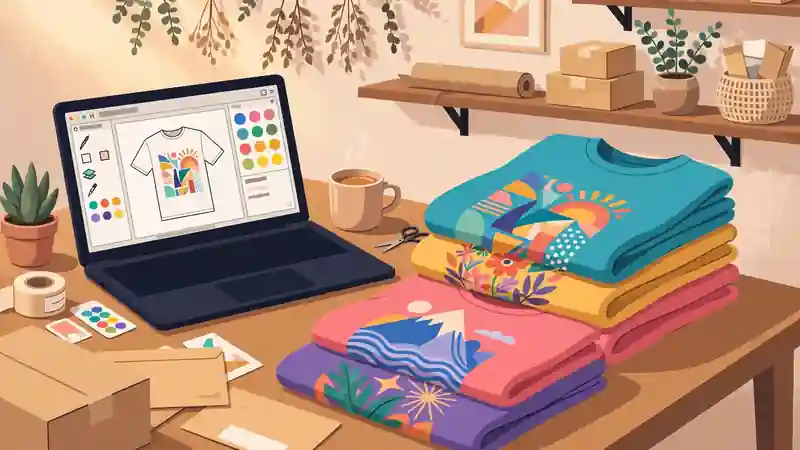
Maya uploaded her first t-shirt design and forgot about it. Three weeks later, her phone buzzed at 2 a.m.: someone had bought her “World’s Okayest Golfer” mug. No inventory, no packing, no stock costs — just $6 profit landing while she slept. Two years later, print on demand pays her rent.
Stories like Maya’s are why print on demand (POD) keeps attracting beginners. You create designs, a partner prints each product only when ordered, and you keep the margin — no warehouse, no bulk orders, no inventory risk. But most gurus skip the honest part: the average beginner waits 2 to 4 months for that first sale, and many quit first. This guide shrinks that timeline — the right niche, designs people want to wear, and a platform strategy that gets eyeballs on your work fast.
Why Print on Demand Still Works in 2026
Every year someone declares POD dead, and every year new sellers prove them wrong. It removes the two biggest barriers to selling physical products — capital and logistics. You can launch with under $50 and test dozens of ideas without buying a single blank shirt.
Demand keeps growing because people buy products reflecting their identity — hobbies, pets, professions, humor. But generic “Live Laugh Love” designs drowned years ago; today’s winners serve specific audiences with designs that feel made for them. A nurse buying a “Caffeine and Compassion” scrub top is buying recognition of who she is.
The math is modest but real: roughly $3–$8 per marketplace sale, $8–$15 on your own store with a print partner. Sellers crossing $1,000/month usually have 100–300 live designs in a tight niche cluster — each taking 30–60 minutes once you have a system. It’s a volume game played with focus, and focus gets you the first sale fast.
Why Most Beginners Wait Months for Sale Number One
First: designing for everyone. “Be Happy” competes with ten million shirts; “Beagle Mom: Powered by Coffee and Chaos” competes with a few hundred — and beagle moms are searching for exactly that.
Second: upload and pray. Beginners upload 20 designs, ignore titles and tags, and wonder why nothing sells. Marketplaces are search engines — unoptimized designs may as well not exist.
Third: weak thumbnails. On a crowded search page, buyers decide in under two seconds. A design on a wrinkled, badly-lit mockup loses to the same idea presented cleanly — and free mockup generators make this an easy fix.
Fourth: trademark roulette. Band names, cartoon characters, sports logos — uploading these gets accounts banned fast. “Inspired by” is not a legal shield. Original niches have plenty of money in them; stay there.
Pick a Niche Where People Actually Spend Money
Your niche is the highest-leverage decision you’ll make. Don’t pick “funny shirts” — pick an audience. Strong niches share three traits: identity (members proudly label themselves), spending habits (they already buy merch), and specificity (50 design ideas in five minutes).
List 10 groups you belong to — your profession, hobbies, pets, hometown — and ask: do these people buy merch declaring who they are? Dog owners: absolutely. Pickleball players: obsessively. That’s your shortlist.
Validate before you design. On Etsy, type your niche + “shirt” and watch the autocomplete — those are real buyer searches. Check the top results for consistent sales (review counts, bestseller badges) and beatable designs. An empty market usually means no demand; you want a busy market where you can do it better or different — then commit to that one niche for your first 30–50 designs.
Design Like a Pro Without Being One
Most bestselling POD designs are typography plus one simple graphic — not masterpieces. A clean font, a clever phrase, and one well-placed illustration outsells complex artwork most of the time, and Canva’s free tier is enough to start.
AI art generators have lowered the bar further for non-designers. You can create distinctive artwork in styles that sell well on merch — watercolor-style artwork for soft, giftable designs, bold pop-art graphics for dark shirts, or sugar skull designs with cult followings. Generate 20 variations, keep the best 2, refine — never upload raw first drafts.
A few rules separate sellers from uploaders. Keep text readable at thumbnail size — if you can’t read it in a 200-pixel preview, simplify. Stick to 1–3 colors for print-friendliness, and always preview on light and dark mockups. Build a mini brand kit — 2–3 fonts, one color palette — so your shop looks like a collection, not random uploads. Cohesion builds trust, and trust converts.
Choose Your First Platform Wisely
For your first sale, marketplaces with built-in traffic win. Redbubble and TeePublic are the simplest start: upload, set your margin, done — they handle printing, shipping, and support, though margins run lower. Etsy plus Printful or Printify is the most popular serious-beginner combo: Etsy brings massive buyer traffic with real purchase intent, and the print partner fulfills under your brand for $0.20 per listing.
Start with ONE marketplace, not five — each has algorithm quirks, and splitting attention means mastering none. Upload 20–30 niche-focused designs, optimize every title and tag, and allow 3–4 weeks of consistent uploads before judging.
Your First 30 Days: A Realistic Timeline
Week 1 — Research and setup. Pick your niche with the validation method above, complete your shop profile, and build your brand kit. Study 20 bestselling designs in your niche and note the patterns: phrases, styles, colors, price points.
Week 2 — Design sprint. Create 15–20 designs: 60% your take on proven sellers, 30% variations, 10% experiments. If you’re generating artwork with AI, anime-inspired art styles are worth a look — original anime-aesthetic designs (never copied characters) have fiercely loyal buyers.
Week 3 — Launch and optimize. Upload everything with search-optimized titles (buyer keywords front-loaded), fill all Etsy tags, and write descriptions answering “who is this for?” Then share your 3 best designs where your niche hangs out — a subreddit, a Facebook group — as a fellow enthusiast, never a spammer. One genuine post can deliver sale number one.
Week 4 — Double down. Which designs earned views and favorites? Make 10 more in that vein. Sellers following this cadence usually land sale number one in weeks 3–6; the ones waiting months uploaded 12 designs once and stopped.
Keep Reading
- Cyberpunk Neon AI Photo Prompt: Your Photo, Straight Out of the Future
- Superhero Comic AI Photo Prompt
- Bollywood Movie Poster AI Photo Prompt
- Art Timelapse AI Prompt
Frequently Asked Questions
How much does it cost to start?
Under $50. Marketplaces are free; Etsy charges $0.20 per listing. Optional: Canva Pro (~$15/month) or a few dollars per outsourced design. No inventory — that’s the point.
How long until the first sale?
With 20+ niche-targeted designs, optimized titles and tags, and consistent uploads, most beginners sell within 3–6 weeks. Generic designs uploaded once and abandoned take months — or never sell. Volume plus focus is the formula.
Do I need design skills?
No — but you need taste and a system. Typography-based designs, Canva, and AI-generated artwork lowered the skill floor. What can’t be outsourced is judgment: studying what sells and iterating. That develops fast.
Isn’t POD too saturated?
Generic POD is saturated; specific niches aren’t — thousands of passionate micro-audiences have thin merch options. Saturation punishes sellers with no niche and rewards those who pick one and serve it best.
Your first sale won’t make you rich — Maya’s was six dollars. But it proves the machine works: a stranger paid for something you created from nothing. Pick your niche this week, design the next, launch the week after. Move fast, stay focused — the 2 a.m. notification could be yours.