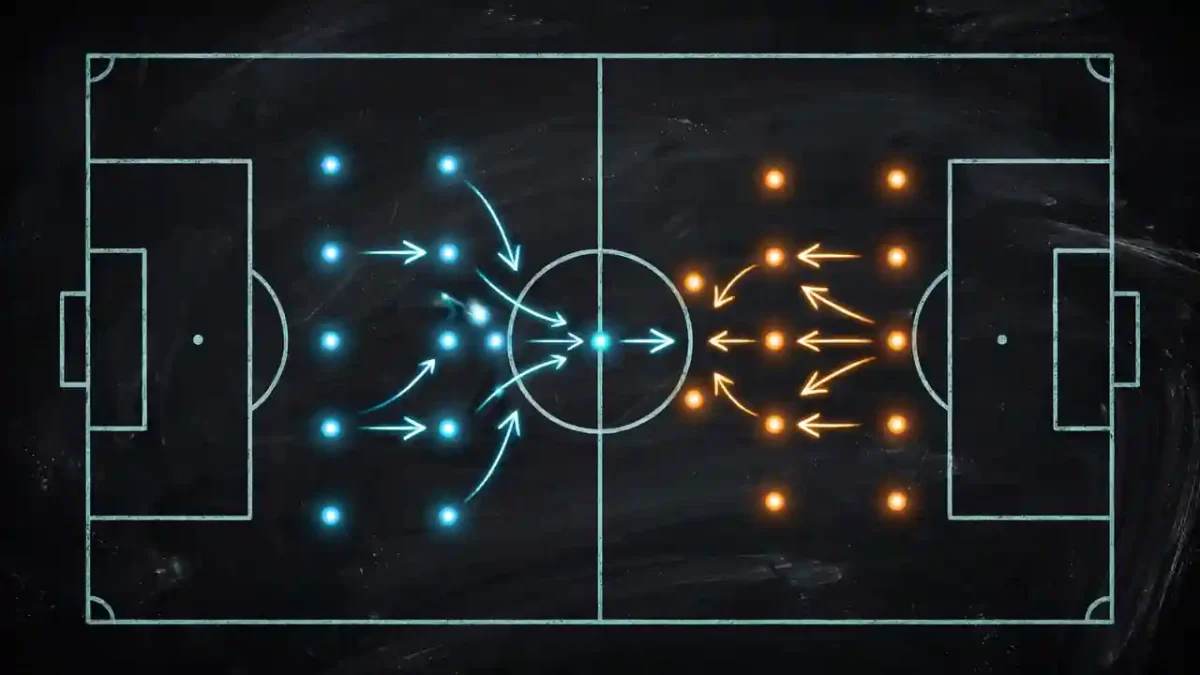
You are watching a match, the commentator says “they’ve switched to a 4-3-3 with inverted full-backs,” and everyone around you nods like this is obvious. Tactics can feel like a secret language spoken by coaches and pundits, but it is entirely learnable — and understanding even the basics transforms watching football from following the ball to reading the game. Suddenly you see why a team keeps passing sideways, why a substitution changed everything, why the underdog’s game plan almost worked. The end result: within a month of casual learning, you will spot formations, recognise pressing, and understand why a manager made that substitution — and your enjoyment of every match will roughly double. Realistic effort: one match a week watched actively, plus 15 minutes of reading or video after. No coaching badges required, and no prior knowledge assumed.
What you will need
- One team to follow closely for a month (familiarity beats breadth)
- Access to full match replays or extended highlights, not just goals
- A free tactical analysis channel or website for post-match breakdowns
- A notebook or phone notes app for observations (optional but powerful)
- Patience — tactics reveal themselves gradually, not in one sitting
Learning tactics, step by step
- Learn the five basic formations by shape, not numbers. Forget memorising 4-4-2 versus 3-5-2 for now. Just learn to see shapes: four defenders in a line, a midfield bank, attackers up top. During any match, pause and count how many players each team keeps near their own goal. Within two games you will start seeing the skeleton every team is built on.
- Watch the team without the ball for ten minutes. Most beginners track only the ball, following it like a cat follows a laser pointer. Force yourself to watch the defending team instead: do they chase high up the pitch (pressing) or drop back into a compact block near their own box? Are the wide players tracking back or staying high for the counter? This single habit teaches you more about tactics than any article, because a team’s defensive shape reveals its entire game plan — cautious teams defend deep, brave teams defend high.
- Learn what “pressing” actually means. Pressing is simply hunting the ball in packs immediately after losing it, instead of retreating. Watch for triggers — a backwards pass to a full-back, a heavy touch — that spark three attackers sprinting at the ball. Once you spot pressing, you will notice some teams do it relentlessly and others barely at all, and matches start making strategic sense.
- Understand transitions: the five seconds after possession changes. The most dangerous moments in modern football are the seconds right after a team wins the ball — defences are disorganised, players are facing the wrong way, and space is everywhere. Watch how quickly teams sprint forward (counter-attacking sides) or slow the game down to keep control (possession sides). Some of the most famous goals in history came from these chaotic seconds. Recognising this rhythm is the difference between watching football and understanding it.
- Follow one tactical concept per week. Week one: formations. Week two: pressing. Week three: wing play versus central play. Week four: set pieces. Trying to learn everything at once is the classic beginner error. One concept, watched for across a full weekend of matches, locks in permanently — five concepts skimmed in an evening evaporate.
- Read one post-match tactical breakdown after each game you watch. Free analysis pieces and video breakdowns point out exactly what you missed: the midfield overload, the full-back tucking inside, the substitution that changed the game. Reading the breakdown after forming your own impressions is the fastest feedback loop in football learning — you will be stunned how much was happening off the ball while you watched the player in possession. Over a season, this habit alone builds a genuinely sophisticated understanding.
- Learn the language gradually, from the pitch outward. Start with concrete terms you can see: overlap (full-back running past the winger), through ball, high line. Then add abstract ones: pivot, half-space, rest defence. Never memorise a glossary; learn each term the first time you see it happen in a match, and it will stick because it is attached to a memory.
- Compare two contrasting teams deliberately. Watch a possession-heavy team one day and a counter-attacking team the next. The contrast teaches faster than any explanation — you will feel the difference in tempo, risk, and space before you can name it. This is also the perfect preparation for understanding great rivalries, where clashing styles decide fixtures like El Clásico.
- Rewatch the first 15 minutes of a big match the next day. Live, you watch emotionally; on replay, you watch analytically. The opening quarter of a game reveals both managers’ plans before fatigue and scorelines distort them. Fifteen focused minutes of rewatching teaches more than ninety distracted ones — this is the habit that separates casual fans from students of the game.
Common mistakes beginners make
The biggest mistake is confusing tactics with effort — shouting “they’re not trying” when a team is actually executing a disciplined low block to perfection. Tired-looking players are often following instructions, not lacking heart; some of the smartest tactical performances in history looked lazy to the untrained eye. Second, do not judge a tactic by one match; even brilliant game plans fail against better execution, injuries, or a moment of individual magic. Third, avoid the trap of thinking there is one “correct” way to play — possession football and counter-attacking have both won everything, and the debate between them is the sport’s lifeblood, not a problem to be solved. Fourth, do not parrot pundit phrases without understanding them; saying “parking the bus” about every defensive team marks you as a beginner faster than asking an honest question ever would. Finally, remember tactics serve players, not the reverse — a great plan with the wrong personnel fails, which is why transfers, injuries, and squad depth matter as much as the manager’s ideas.
Your tactics checklist
Before your next match, run this mental checklist: can I name both teams’ basic shapes within the first ten minutes? Can I tell which team is pressing and which is sitting back? Can I spot at least one substitution’s tactical purpose, rather than just noticing fresh legs? Can I explain at full-time, in two sentences, why the winner won — beyond “they wanted it more”? When you can answer all four honestly, you have crossed from spectator to student — and football will never be boring again, because every match becomes a puzzle you can read. To put your new tactical eye to work, compare the two leagues where styles clash most in our La Liga vs Premier League guide for new fans, browse the greatest football rivalries every new fan should know to pick your derby, and when the biggest one arrives, our tips for enjoying El Clásico like a true fan will complete the experience.