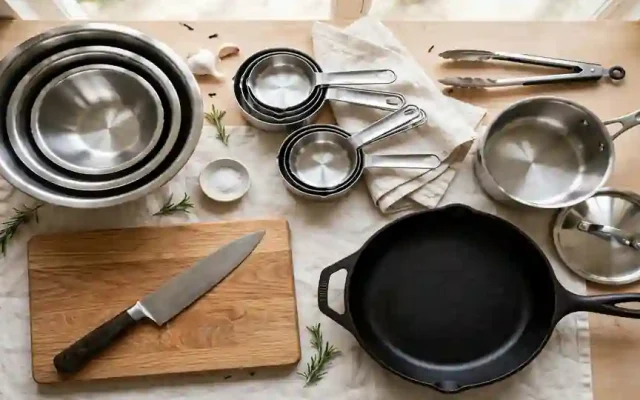
By the end of two hours, you will have the bones of a week of dinners and lunches ready in the fridge: cooked grains, roasted vegetables, a protein or two, and a sauce that makes it all taste deliberate. This is not about eating the identical meal five times, and it is not about spending Sunday as a full-time cook. It is a simple system: prep flexible components, not finished meals, so each evening you assemble something slightly different in about ten minutes. Total effort is roughly two hours of relaxed cooking, plus a short shop beforehand. If you are still building your kitchen, our list of best kitchen tools every beginner cook actually needs covers the small kit this method relies on — no special equipment required.
What You Will Need
- A short shopping list built around one grain, two vegetables, and one or two proteins
- Several airtight containers in mixed sizes, plus labels or tape
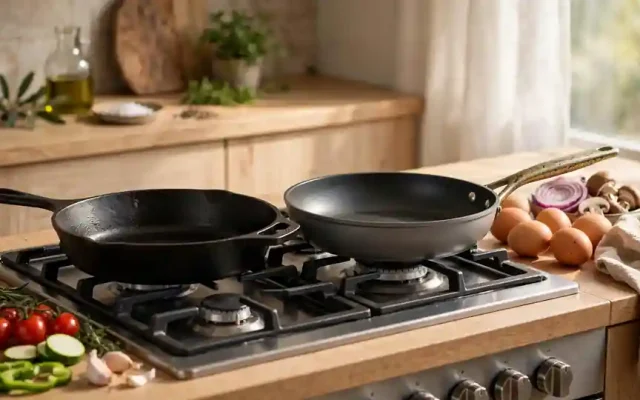
- One large oven tray, one large pot, and one good pan
- Cooking oil, salt, pepper, and two or three favourite spices or sauces
- A kettle for fast boiling water
- Two free hours and a clear kitchen counter to start
The Two Hours, Step by Step
- Plan five dinners on paper first. Spend ten minutes before you shop writing the week’s meals around shared ingredients — for example, rice that serves two dinners and becomes fried rice on Friday. A written plan stops overbuying and guarantees your components actually combine into meals instead of becoming random fridge contents.
- Heat the oven and start the grain. Grains cook themselves, so they go on first. Put your rice or other grain on using the method in our beginner’s guide to cooking rice perfectly, then turn your attention elsewhere while it simmers untouched. Oven on at the same time, so no minutes are wasted waiting later.
- Chop the oven vegetables in one batch. Cut hardy vegetables — carrots, peppers, onions, sweet potato, broccoli — into similar-sized pieces so they cook evenly. Toss with oil, salt, and one spice blend, spread on the large tray in a single layer, and roast. Crowded vegetables steam instead of roasting, so use two trays if you must.
- Cook proteins while the oven works. Use the hob time deliberately: brown chicken pieces, boil eggs, simmer lentils, or crisp tofu in your good pan. Cook proteins simply with salt and one seasoning direction, because you will vary sauces during the week. Let everything rest before slicing, so juices stay in the food, not on the board.
- Make one sauce and one flexible extra. A single sauce — a yoghurt-herb mix, a peanut-lime blend, or a simple tomato sauce — transforms the same components into different dinners. Add one flexible extra such as a big salad base, a pot of soup, or a batch of wraps filling, depending on your week.
- Wash and store salad and fresh items. Wash leaves and herbs, dry them properly, and store them with a paper towel in the container to absorb moisture. This five-minute job is the difference between salads that stay crisp until Thursday and salads that slump by Tuesday.
- Cool everything before sealing containers. Let hot food cool until it stops steaming — but do not leave cooked food sitting out for hours. Food safety basics matter here: refrigerate promptly once cooled, keep the fridge cold, and plan to eat refrigerated cooked components within a few days, freezing anything meant for later in the week.
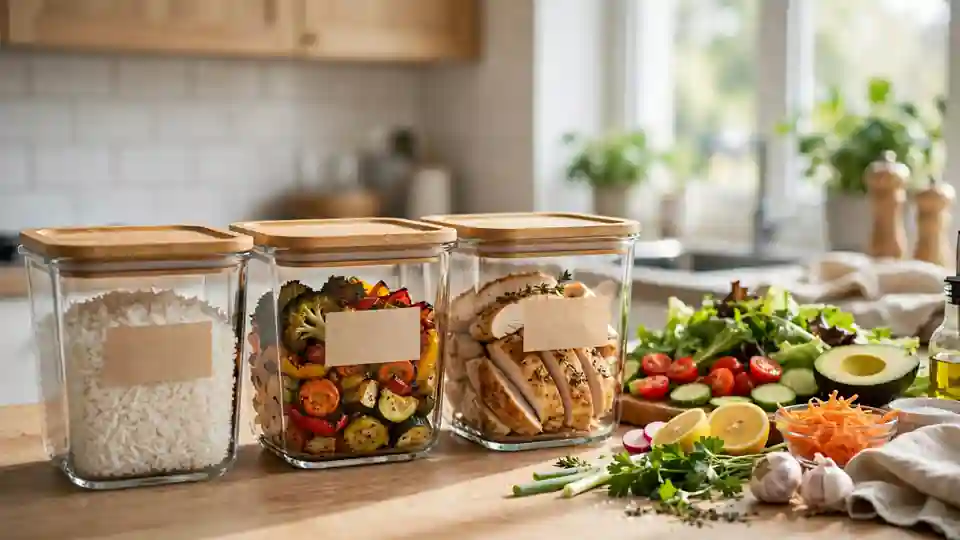
- Label containers with contents and day. Tape and a marker beat guesswork. Write what each container holds and the day you cooked it. Arrange the fridge so the food to eat first sits at the front. This small act prevents the classic Thursday mystery-container moment and cuts waste dramatically.
- Wash up while the last tray finishes. Fill the sink early and wash as you go, so the session ends with a clean kitchen rather than a disaster zone. The whole system only survives if the clean-up is painless; a two-hour prep that leaves an hour of dishes will not happen twice.
A Sample Week Built From One Prep Session
For example, suppose your Sunday prep produced rice, roasted peppers and sweet potato, chicken pieces, boiled eggs, a yoghurt-herb sauce, and a washed salad base. Monday’s dinner is a rice bowl with chicken, roasted vegetables, and sauce spooned over. Tuesday, the same chicken and vegetables fill warm wraps with salad. Wednesday, leftover rice becomes fried rice with an egg and whatever vegetables remain. Thursday, eggs headline a big salad with roasted sweet potato on the side. Friday is deliberately flexible — soup from the freezer, or a takeaway you actually planned for. Notice that no two dinners repeat, yet every component cooked once gets used, and almost nothing is thrown away.
Adjust the pattern to your household without changing the structure. Swap rice for pasta, couscous, or potatoes; swap chicken for lentils, beans, eggs, or fish cooked fresh on the day; swap the yoghurt sauce for a tomato, peanut, or simple oil-and-lemon version. Vegetarian and family versions follow the same skeleton — one grain, two vegetables, one or two proteins, one sauce, one fresh element. Once you have run the system three times, write your version down. That single page becomes your default plan for busy weeks, and shopping from it takes minutes because the list barely changes.
Common Mistakes That Ruin Meal Prep
The most common failure is prepping complete identical meals; by Wednesday, nobody wants them, and they get wasted. Components stay flexible, finished meals do not. The second mistake is prepping food you do not actually like in the name of virtue — you will order takeaway and resent the fridge. Third, cooking everything plain. One sauce, one strong seasoning direction, and one fresh element per meal keep the week interesting. Fourth, overfilling the fridge with more than your household can eat in a few days, which is both unsafe and wasteful; prep for four days and freeze or refresh for the rest. Finally, beginners often under-season components, a flaw covered in our roundup of cooking mistakes beginners make and how to fix them — taste as you go, always.
Treat the first two sessions as experiments rather than commitments. Note which components ran out by Wednesday, which container nobody opened, and which dinner everyone asked for again. Those three notes are your real recipe, and they personalise the system faster than any sample plan. Most households find their rhythm by the third week: a fixed shopping list, a familiar order of jobs, and a session that feels more like cooking one generous meal than running a production line. That is the point where meal prep stops being a project and becomes simply how the week starts.
Your Final Checklist
- Five dinners planned, with components that combine in different ways
- Grain cooked, vegetables roasted, proteins ready, one sauce made
- Fresh items washed, dried, and stored properly
- Everything cooled, sealed, labelled, and refrigerated in order
- Kitchen clean at the end of the two hours
- A note of what worked, ready for next week’s plan