You have never bought an air purifier. The product pages throw words like CADR, HEPA-13, and PM2.5 at you, the prices range from suspiciously cheap to painfully expensive, and every listing claims to be the best. Here is the truth in plain English: an air purifier is a fan that pulls room air through filters and pushes cleaner air back out. That is the whole machine. Everything else — the specs, the stages, the smart features — is detail around that one job. This guide starts from zero and walks you to a confident first purchase, explaining every term as it comes up and flagging the traps beginners fall into.
What an air purifier actually does
A purifier cleans the air in one room by circulating it through filters that trap particles. It is good at reducing fine dust, smoke, pollen, and pet dander floating in indoor air — the stuff that makes smog season miserable inside your own home. What it does not do: it does not create oxygen, it does not cool or heat the room, and it does not clean the whole flat from one corner. Think of it as a diligent roommate who keeps tidying one room — effective within its space, useless beyond the doorway. It also cannot fix pollution at the source: if windows are wide open on a smoggy day, the machine fights a losing battle. Learning how to check the AQI and plan your day around pollution helps you decide when to seal the room and let the purifier work.
The parts inside, in plain English
Almost every purifier has the same three stages. The pre-filter is a coarse mesh that catches hair, lint, and large dust — it protects the expensive filter behind it and is often washable. The HEPA filter is the workhorse: a dense mat of fibres that traps the fine particles, including the PM2.5 that defines smog. “True HEPA” is the term to look for; vague phrases like “HEPA-like” or “HEPA-type” usually mean a weaker filter. The activated-carbon filter absorbs smells and some gases — cooking odours, paint fumes, that musty cupboard smell. Some machines add extra stages like UV lights or ionisers; for a first purchase, these are optional extras, not essentials. The filter set is also a running cost: filters clog and need replacing, so the price of replacements matters as much as the price of the machine.
The three specs that actually matter
Ignore the marketing adjectives and learn three numbers. Coverage area (in square feet) tells you which room size the machine is built for — match it to your room, not your flat. CADR (clean air delivery rate) tells you how much clean air it pushes out; higher means it cleans faster and can run on a quieter setting. Noise (in decibels) tells you how loud it is — check the lowest setting, since that is the speed you will live with at night. Lower numbers are quieter. Everything else on the spec sheet is secondary for a beginner. If you want the full sizing method, this step-by-step guide to choosing by room size walks through measuring and comparing in about thirty minutes.
What to figure out before you shop
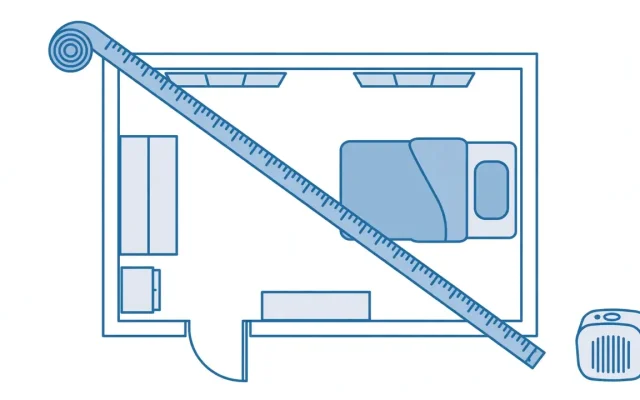
First, decide which room gets the purifier — the bedroom is the most common first choice, since you spend a third of your life there. Measure that room’s length and width. Second, set a real budget that includes one year of filter replacements, not just the machine; prices vary by brand and region, so check current filter prices on the product page before you commit. Third, note your deal-breakers: must be quiet enough for sleep? Must fit a specific corner? Must handle kitchen smells? Write these down. Fourth, shortlist two or three models instead of falling for the first good-looking listing. A calm half hour of comparing beats an impulsive purchase you regret when the first filter bill arrives. For a sense of what the options look like, this comparison of purifier types for small apartments shows what each style is good at.
First steps after unboxing
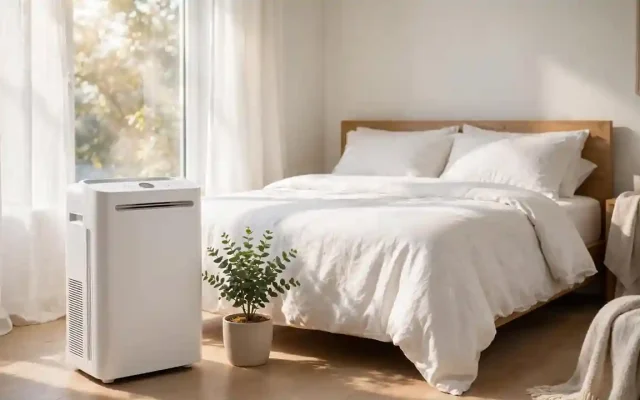
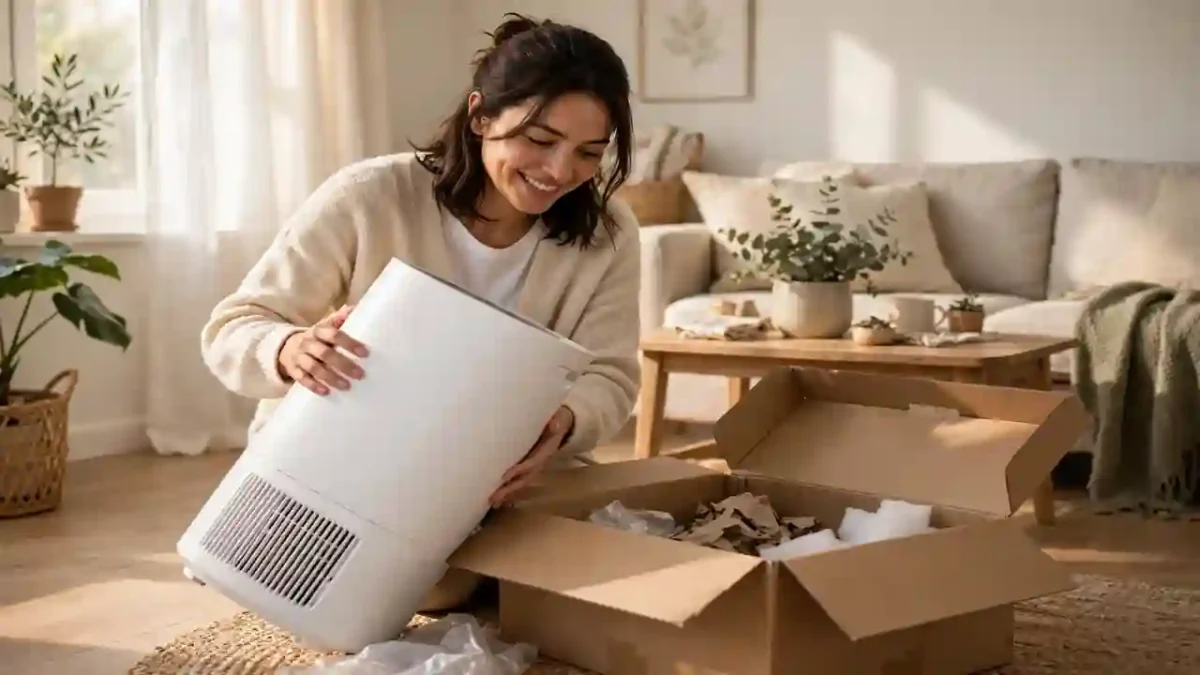
Place the purifier in open floor space with clearance around its air intakes — not behind curtains, not wedged under a desk. Remove any plastic wrapping from the filters (a surprisingly common beginner oversight that leaves the machine running with sealed filters). Close the room’s windows and doors on polluted days so the machine cleans the same air repeatedly instead of fighting incoming smog. Run it on a higher speed for the first hour to bring the room down, then drop to a low, quiet setting to maintain it. Let it run while you are in the room — a purifier switched off cleans nothing, and the low hum becomes background noise within days.
Common beginner mistakes
Buying one machine for the whole flat is the classic error — doors and walls stop airflow, so budget for one purifier per main room over time, starting with the bedroom. The second mistake is never checking filter prices until the replacement light comes on. The third is judging a purifier by how it looks rather than its coverage rating and noise numbers. The fourth is running it with windows open on bad-air days and wondering why nothing improves. The fifth is expecting miracles in an hour: a correctly sized purifier steadily improves a room over one to two hours, then maintains it — it is a marathon runner, not a sprinter.
Getting better results over time
Once the basics are working, small habits multiply the effect. Vacuum and dust with a damp cloth so the purifier is not fighting settled grime kicked back into the air. Keep the pre-filter clean — a quick rinse or vacuum every couple of weeks keeps airflow strong. Replace the main filter on schedule rather than stretching it; a clogged filter makes the fan work harder for worse results. On clean-air days, open the windows and give the machine a rest. And when you are ready for a second unit, you will already know exactly what to look for. These nine tips for getting the most out of your air purifier turn these basics into daily habits.
Frequently asked questions
Do I need one purifier per room? Realistically, yes — one per room where you spend hours. A bedroom unit is the best first purchase; add the living room later if the budget allows.
How long should I run it each day? On polluted days, run it whenever you are home and the room is closed up. Continuous low-speed running is fine and uses modest electricity; check the wattage on the spec sheet.
When do I replace the filter? Follow the manufacturer’s schedule or the machine’s filter-life indicator. In dusty cities, filters clog faster than the brochure suggests. Filter prices vary by brand and region, so check current prices when budgeting.
Will it help with my dust allergy? Purifiers reduce airborne dust, pollen, and pet dander, which many people find helps with everyday stuffiness. This is general information, not medical advice — talk to a doctor about persistent allergy symptoms.
Can I just open windows instead of buying one? On clean-air days, ventilation is wonderful and free. On smoggy days, open windows undo the purifier’s work. Many owners do both: windows when the AQI is good, purifier when it is not. If you are weighing alternatives, the honest purifier vs indoor plants comparison is worth a read.