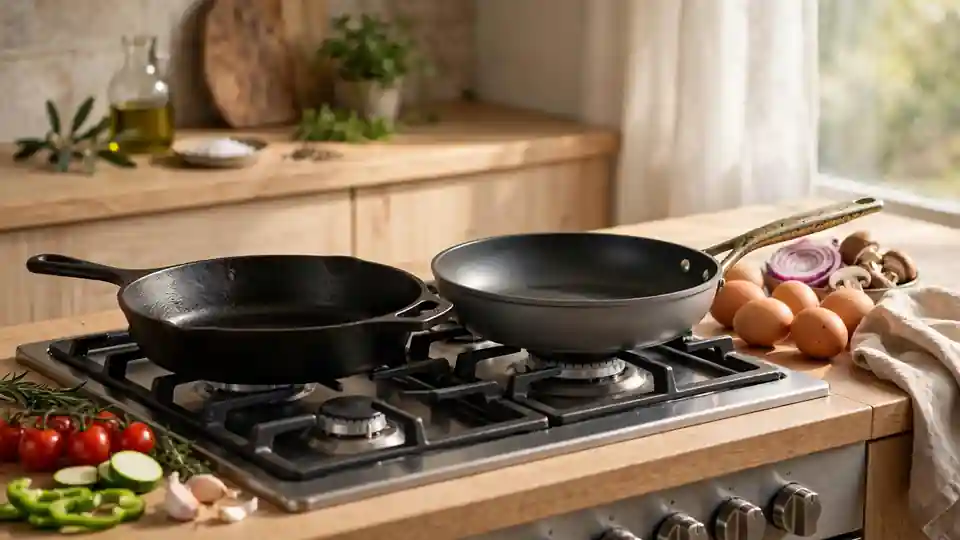
Every beginner cook faces this exact shelf at some point: a heavy black cast iron pan that promises to last forever on one side, a sleek nonstick pan that promises effortless eggs on the other. Both camps have loud supporters, and both pans genuinely deserve a place in home cooking — but rarely the same home, for the same cook, at the same stage. The real decision is about how you cook, how much maintenance you will honestly do, and how long you expect the pan to last. Prices vary a lot by brand, size, and region for both types, so check current prices and focus first on fit. This comparison will help you choose once and choose well, and it pairs with our list of best kitchen tools every beginner cook actually needs if you are building a kitchen from scratch.
The Quick Verdict
Choose nonstick if you are a beginner who cooks a lot of eggs, fish, and pancakes, wants the easiest possible washing up, and accepts replacing the pan every few years. Choose cast iron if you love high-heat searing, want a pan that can last decades, and do not mind a little routine care. Many settled home cooks end up owning both eventually — nonstick for delicate mornings, cast iron for serious browning — but if the budget allows only one today, let your most-cooked meals decide.
Side by Side: Cast Iron vs Nonstick
| Criteria | Cast Iron | Nonstick |
|---|---|---|
| Best at | Searing meat, roasting, crusty breads and potatoes | Eggs, fish, pancakes, delicate foods |
| Heat tolerance | Very high; oven-safe and happy under a grill | Moderate; high heat damages most coatings over time |
| Maintenance | Needs drying, light oiling, and seasoning care | Minimal; wash gently and avoid metal utensils |
| Expected lifespan | Decades with care; can be restored if neglected | A few years before the coating wears and food sticks |
| Weight and handling | Heavy, especially in larger sizes | Light and easy to lift and toss food |
| Learning curve | Moderate; heat management and preheating matter | Very forgiving for beginners |
| End of life | Recyclable metal; rarely truly dies | Coating wear means replacement; check local recycling |
Cast Iron: Strengths and Honest Weaknesses
Cast iron’s strength is heat. Once hot, it holds temperature stubbornly, which is exactly what a proper sear on a steak or crisp skin on potatoes requires, and it moves from hob to oven without complaint. It is also remarkably repairable: rust, stuck food, and tired seasoning can nearly always be cleaned and re-seasoned back to life, which is why these pans get handed down families. A well-kept cast iron surface becomes fairly nonstick over time, though never quite egg-sliding slippery. The weaknesses deserve honesty. It is heavy — a large pan full of food is a two-handed lift for many people. It reacts to long simmering in acidic sauces like tomato, which can strip seasoning and add a metallic taste. It needs drying after washing and a whisper of oil now and then, and it heats unevenly at first, so preheating properly matters. If you know you will never do even that small care, cast iron will quietly become the pan you avoid.
Nonstick: Strengths and Honest Weaknesses
Nonstick’s strength is kindness to beginners. Eggs release, fish fillets stay intact, pancakes flip without drama, and washing up takes seconds. It lets you cook with less added fat and forgives the wobbly heat control everyone has while learning — mistakes covered in our guide to cooking mistakes beginners make and how to fix them are far less punishing in a nonstick pan. The weaknesses are structural. The coating is a wearing part: even careful owners will see performance fade after some years, sooner with high heat, metal tools, or harsh scrubbing. Most nonstick pans dislike very high temperatures, so they will never give you the hardest sear, and many have oven limits. You are buying convenience on a replacement cycle, and you should budget and shop for it in exactly that spirit — mid-priced, well-reviewed, and replaced without guilt when eggs start sticking despite gentle use.
Care Routines in Real Life
Cast iron care, honestly stated, is five small habits: preheat it gently, wash it mostly with hot water and a brush, dry it on the hob for a moment, rub in a drop of oil while warm, and cook in it often. That routine takes under two minutes after a meal, and regular cooking maintains the surface better than any special treatment. What cast iron cannot forgive is being left soaking in the sink overnight, which invites rust — though even rust scrubs off and re-seasons, which is more than can be said for a peeling nonstick coating.
Nonstick care is equally simple and equally specific: wooden or silicone utensils only, no harsh scouring pads, no extreme preheating on maximum heat, and storage that protects the surface, ideally with a cloth between stacked pans. Follow those rules and a decent nonstick pan gives you several good years. Ignore them, especially the heat rule, and the coating ages in months. Neither routine is hard; the real question is which set of rules matches how you naturally behave in your kitchen when you are tired and hungry, because that is the cook the pan has to survive.
A Note on Enamelled and Hybrid Options
You will also meet enamelled cast iron, which wraps the heavy core in a glassy coating: it needs no seasoning, handles acidic sauces happily, and still carries real weight and usually a higher price. Stainless steel is the other classic worth knowing — durable, excellent for sauces, and less forgiving with eggs until your heat control improves. Neither changes today’s decision. They are excellent second pans once you know your cooking style, and that is the honest order of operations: learn on the pan that suits your current habits, then expand when a recipe genuinely asks for more.
Choose Cast Iron If… / Choose Nonstick If…
Choose cast iron if you sear meat or roast often, you want one pan for decades, you enjoy a little kitchen ritual, and your wrists are happy with the weight. Choose nonstick if eggs and fish headline your cooking, you are learning and want forgiveness, easy cleaning decides whether you cook at all, or lifting heavy pans is difficult. Still torn? Buy the nonstick now for daily confidence, and add cast iron when a recipe makes you wish for it — that order suits most beginners, and both choices serve the kind of batch cooking in our guide on how to meal prep for the week in 2 hours perfectly well.
Whatever you choose, buy the size you will actually cook in most: a medium-large pan around the size of your biggest hob ring suits most households, big enough for family portions without becoming a wrestling match at the sink. Check the base sits flat, the handle feels secure with a tea towel in your hand, and the pan fits inside your oven if you plan to finish dishes there. A pan that fails those three practical tests will annoy you daily, regardless of which side of this comparison it came from.