Most first houseplants die from kindness, not neglect. People water on a fixed schedule, move a plant to a dark corner because it looks nice there, then wonder why the leaves turn yellow. The plants on this list forgive those mistakes. They tolerate missed waterings, ordinary room light, and a bit of forgetfulness while you learn what you are doing.
This list is for complete beginners, renters, and anyone who wants greenery without a daily routine. I chose these plants using simple general criteria: how forgiving they are of irregular watering, how well they cope with typical indoor light, and how clearly they show you when something is wrong. No plant is truly unkillable, and prices vary by size, nursery, and region, so check current prices before buying. If you also want food plants, start with growing fresh herbs on your kitchen windowsill alongside one or two of these.
The forgiving plants worth starting with
Snake plant
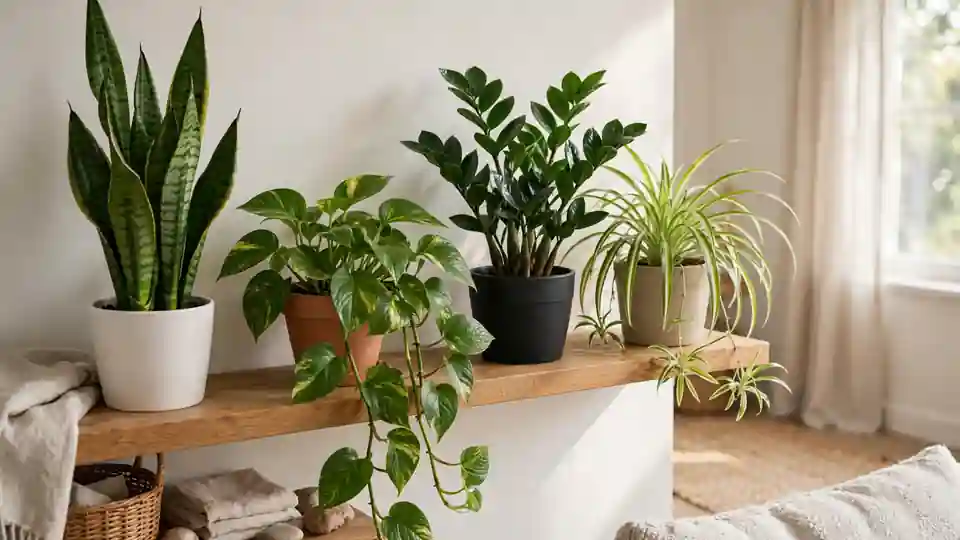
Upright, stiff leaves make this the classic low-effort choice. It stores water in its leaves, so it copes when you forget to water for a while, and it tolerates both bright light and dimmer corners. Water sparingly and let the soil dry out between drinks. The honest downside is slow growth and a real sensitivity to overwatering: soggy soil rots it faster than drought ever will. Keep it in a pot with drainage holes.
Pothos
Pothos trails happily from a shelf or hanging pot and is easy to propagate: snip a stem, place it in water, and roots usually follow. It handles medium light and tells you it is thirsty when the leaves soften slightly. It recovers well after a late watering. The downside is that it can look leggy if it never gets pruned, and in very low light the patterned leaves may fade toward plain green over time.
ZZ plant
The ZZ plant has glossy leaves and thick underground stems that store water, which is why it suits people who travel or simply forget. It tolerates low to bright indirect light and prefers to be left alone. The downside is patience: it grows slowly, so do not expect dramatic change month to month. It also dislikes wet soil, so a light hand with the watering can matters more than any feeding routine.
Spider plant
Spider plants produce arching leaves and small baby plantlets that dangle on thin stems, which you can pot up and share. They like bright indirect light and regular, moderate watering, and they bounce back well from a rough patch. The honest downside is cosmetic: leaf tips can turn brown, especially with very dry air or inconsistent watering. Trimming the tips keeps it tidy, and the plant itself usually stays healthy regardless.
Peace lily
If you want flowers indoors, the peace lily is a forgiving place to start. It droops dramatically when thirsty and perks up after watering, which makes it a good teacher for beginners. It prefers medium light and evenly moist soil. The downside is that same sensitivity: it needs checking more often than a snake plant, and strong direct sun can scorch its leaves. Keep it away from pets that chew leaves.
Heartleaf philodendron
This trailing plant looks similar to pothos but with softer, heart-shaped leaves. It grows steadily in medium light, tolerates the odd missed watering, and is simple to trim when it gets straggly. The downside is that it can become sparse near the base if the top of the pot never receives light. Rotating the pot and occasionally pinning a stem back into the soil helps it fill out instead of only trailing downward.
Aloe vera
Aloe is a compact succulent with thick, fleshy leaves that store water, so it asks for very little: a sunny spot and infrequent watering. Many people keep one in the kitchen. Avoid repeating folk-remedy claims here; treat it mainly as an easy ornamental plant. The downside is light. Without a bright window it stretches and weakens, and like other succulents it rots quickly if the soil stays wet for long periods.
Jade plant
Jade plants are small, tree-like succulents that can live for years with basic care. They like bright light and a thorough watering only once the soil has dried. Their plump leaves make thirst easy to spot, since they wrinkle slightly when the plant needs a drink. The downside is top-heaviness as they grow, plus the usual succulent warning: overwatering is the fastest way to lose one, especially in a pot without drainage.
Cast iron plant
The name gives it away. This plant earned its reputation by surviving low light, temperature swings, and irregular watering that would finish off fussier species. Its dark green leaves suit shady corners where little else thrives. The downside is speed and price: it grows slowly and larger specimens can cost more than other plants on this list, with prices varying by nursery. Buy a healthy size you like looking at from day one.
Chinese evergreen
Chinese evergreens offer patterned leaves in greens and silvers and cope well with medium to low light. They like consistent moisture without sitting in water, and they are generally relaxed about ordinary room conditions. The downside is cold: chilly drafts and very cold rooms can damage the leaves. Keep yours away from exterior doors in winter and from air-conditioning vents, and it should reward you with steady, undemanding growth.
How to choose and not kill your first plant
Start with light, not looks. Spend a day noticing where light actually falls in your rooms, then match the plant to that spot instead of hoping it adapts. Check the soil with a finger before watering rather than following a calendar; most beginner losses come from watering on schedule, which is why the advice in common plant care mistakes that kill houseplants is worth reading before you buy. Choose pots with drainage holes, empty saucers after watering, and resist repotting a new plant the day it arrives. Give it a few weeks to settle first.
Buy one or two plants, not six. Learning the rhythm of a single snake plant teaches you more than juggling a shelf of strangers. Once your first plant has stayed healthy for a couple of months, add another with slightly different needs. If you later want something more ambitious, a balcony vegetable garden builds naturally on these basics, and comparing soil versus hydroponics for indoor herbs can wait until your confidence is up.
The short verdict
For the lowest effort, pick the snake plant, ZZ plant, or cast iron plant. For trailing greenery, pothos or philodendron. For flowers, the peace lily. Any of them can thrive with ordinary care, and the skills you learn keeping one alive transfer to everything greener that follows.
A quick buying checklist for the shop
Whichever plant you choose, spend two minutes inspecting it before paying. Look for firm, evenly coloured leaves without brown patches, sticky residue, or fine webbing between stems. Check the undersides of a few leaves, where small pests usually hide first. The soil should smell earthy, not sour, and roots should not be circling thickly out of the drainage holes. A smaller, healthy plant almost always overtakes a larger, struggling bargain within a few months, so buy the specimen that looks quietly vigorous rather than the biggest one on the shelf.