
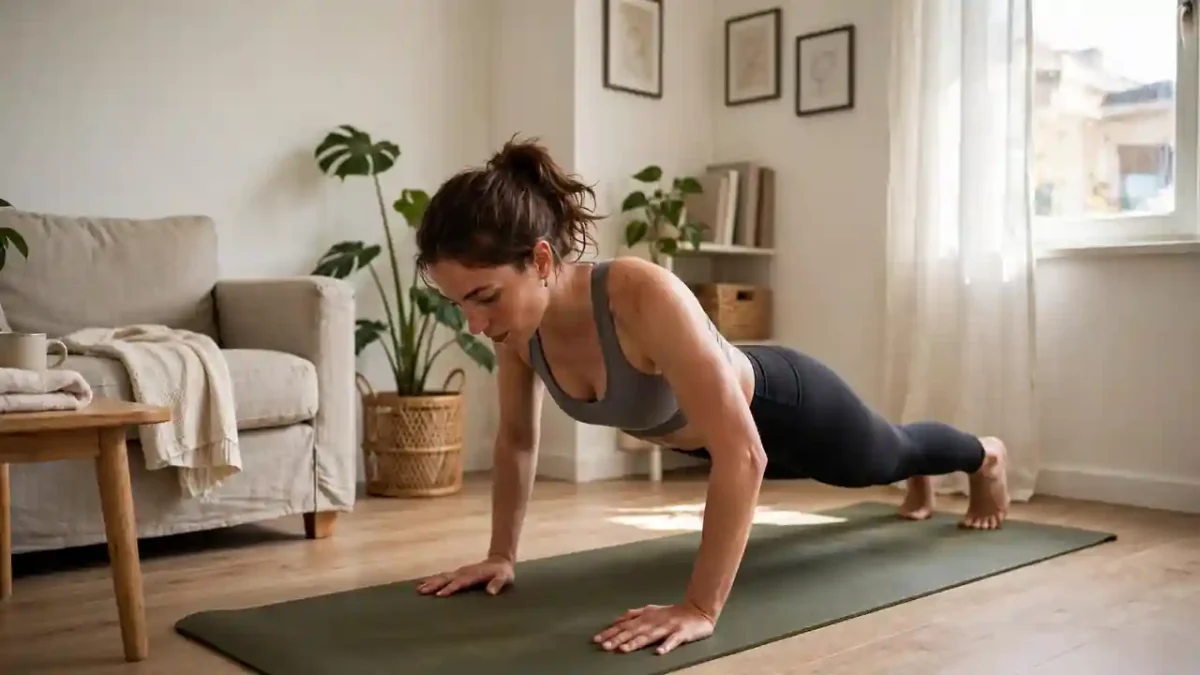
Your living room floor is enough. That is the honest starting point for anyone who wants to move more without buying gear, joining a gym, or clearing an hour they do not have. The routines below were chosen for three simple reasons: they need zero equipment, they work in a small space, and a beginner can understand them in one reading. This is general information for healthy adults, not medical advice — talk to a doctor if you have a health condition.
None of these will transform anyone overnight, and any list that promises that is selling something. What they can do is help you build a steady habit, which is where the real value sits. If mornings are your quietest time, pairing a short session with the ideas in this beginner’s guide to a morning routine can make the habit easier to keep.
How This List Was Chosen
Every routine here uses only your body weight, needs no more space than a yoga mat, and can be scaled up or down. Some focus on strength, some on mobility, and some simply on getting your heart rate up gently. Pick based on your joints, your floor, and what you will actually repeat, not on what looks impressive in a video.
1. Bodyweight Squats and Counter Push-Ups
This pairing is the friendliest entry point on the list. Squats build leg strength using a chair behind you as a safety guide, and counter push-ups let you press against a kitchen worktop at an angle your arms can handle. It suits complete beginners and anyone returning after a long break. The honest downside is that it can feel too easy after a few weeks, so you will need slower reps or extra sets to keep progressing.
2. The Floor Core Routine
Dead bugs, glute bridges, and a short plank hold make up this quiet, neighbour-friendly routine. It suits people in flats who worry about noise, and anyone who wants to feel steadier in everyday bending and lifting. Everything happens on the floor, so a mat or thick towel helps. The downside is that floor work is not for everyone — getting up and down comfortably matters, so skip it if that movement itself is a struggle.
3. Low-Impact Standing Cardio
Marching in place, step touches, gentle knee lifts, and arm swings keep your feet quiet and your joints happier than jumping routines. It suits beginners, older adults who have been cleared to exercise, and anyone whose knees dislike impact. You can do it while music plays and stop at any point. The downside is intensity: it raises your heart rate modestly, so progress comes from longer sessions rather than harder jumps.
4. The Stair and Hallway Workout
If you have stairs or a hallway, you already own a workout space. Slow step-ups, walking laps, and wall sits turn dead space into a simple circuit. It suits people who get bored standing in one spot and prefer movement that feels like real life. Use the handrail, wear shoes with grip, and keep the pace honest. The downside is obvious: no stairs, no workout, and shared stairwells in flats are rarely private.
5. Chair-Based Strength Session
A sturdy chair becomes your bench, support, and step. Seated leg extensions, chair dips with bent knees, sit-to-stands, and supported split squats cover most major muscles. It suits beginners who want support while they build confidence, and anyone working in a tiny room. Check the chair cannot slide before you start. The downside is that chair height changes the difficulty a lot, so one chair may feel very different from another.
6. Mobility and Stretch Flow
Neck circles, shoulder rolls, cat-cow on all fours, hip openers, and calf stretches form a slow flow that leaves most people feeling looser. It suits desk workers, rest days between harder sessions, and evenings when energy is low. If you spend your day at a desk, the advice in these focus tips for working from home pairs well with a daily mobility break. The downside is that stretching alone will not build much strength, so treat it as a companion, not a replacement.
7. The 20-Minute Full-Body Circuit
Five moves — squats, push-ups, reverse lunges, glute bridges, and a plank — done in rounds with rest between them. It suits people who want one repeatable session instead of deciding daily, and it scales by adding or removing a round. The structure is easy to remember after one try. The downside is monotony: the same circuit three times a week bores some people within a month, so rotate the order.
8. Wall Workout for Small Spaces
Wall sits, wall push-ups, wall slides for shoulders, and standing calf raises against a wall need almost no floor space at all. It suits renters in studio flats and anyone nervous about balance, because the wall is always there to catch you. The moves are quiet and require no jumping. The downside is lower intensity for legs beyond the wall sit, so pair it with walking or squats for a fuller week.
9. Dance-Along Cardio at Home
Following a simple dance routine in your kitchen sounds silly until you realise twenty minutes disappeared. It suits people who hate formal exercise but love music, and it is easy to adjust by choosing slower songs. Clear the floor, wear socks or shoes that grip, and keep water nearby. The downside is coordination: the first sessions feel clumsy, and following along needs a screen, which not everyone wants during exercise time.
10. Yoga-Inspired Strength Flow
Slow sequences linking standing poses, lunges, planks, and balances build strength and control without a single weight. It suits people who want one session that covers strength and mobility together. If you are deciding between styles, this yoga versus pilates comparison explains the differences honestly. The downside is that wrist-heavy poses bother some people, and form matters, so learn the basics slowly rather than copying fast flows.
What to Consider Before You Start
Start smaller than your enthusiasm suggests. Two short sessions a week that actually happen beat a heroic daily plan abandoned by Friday. Warm up with a minute of marching and easy arm circles, and stop any move that causes sharp pain — discomfort from effort is normal, pain is a signal. Flooring matters too: a mat, rug, or folded towel protects knees and elbows, and bare feet or grippy shoes are safer than socks on wood.
Think about progression before you need it. When a routine feels easy, first add repetitions, then add a round, then slow the movement down. That order keeps things safe without equipment. Finally, schedule sessions like appointments. The habit advice in this guide to building good habits explains why attaching exercise to an existing daily cue works better than relying on motivation.
The Honest Verdict
For most beginners, the best choice is the 20-minute full-body circuit twice a week plus the mobility flow on other days. Runners-in-training can add ideas from this beginner’s guide to starting running later. Start with one routine, repeat it for two weeks, and only then add variety. Consistency, not novelty, is what makes home workouts work.




One Comment