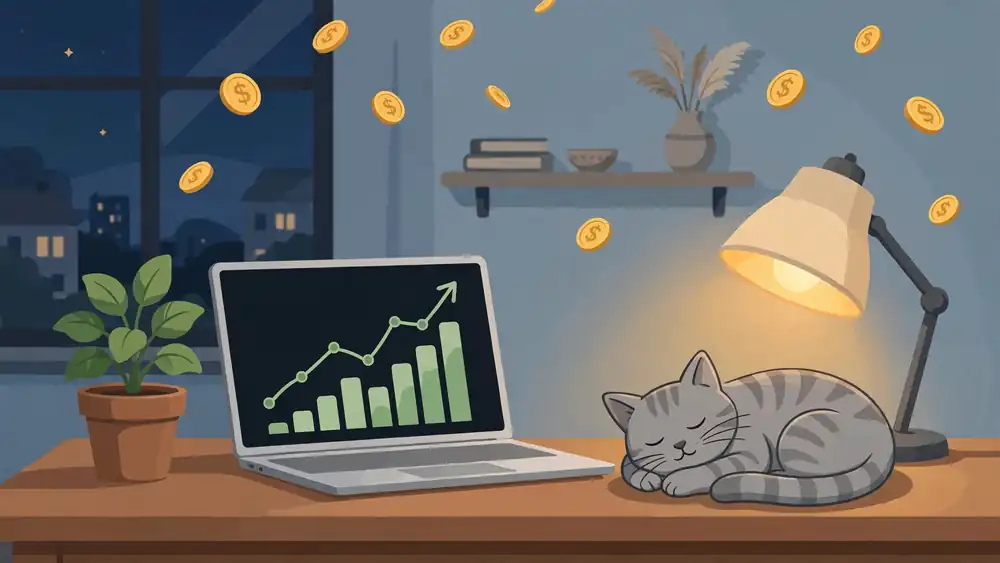
At 2:17 on a Tuesday morning, my phone lit up with a payment notification. I was asleep. When I woke up, the money was still there — thirty-eight dollars from a digital download someone had bought while I was dreaming. That moment is exactly why the phrase “passive income” hooks so many people. It is also exactly why the phrase lies a little.
Here is the part most articles bury at the bottom: nothing on this list is truly effort-free. Every passive stream below demanded either weeks of unpaid work up front or money I was willing to risk. What makes them passive is that the work happens once and the earning can repeat — sometimes for years. If you can accept that trade, here are 15 ideas that genuinely work in 2026, with honest numbers attached.
The Uncomfortable Truth About “Passive”
The word passive suggests doing nothing. The reality is closer to “front-loaded.” You build the product, upload the photos, or buy the asset first — and only then does the income start arriving with less effort. A digital download I made in one weekend took three weeks of research, design, and listing optimization before the first sale. A rental property can pay you monthly, but only after a down payment and the occasional midnight plumbing call.
There is also maintenance nobody mentions. Products need updating, listings need refreshing, and markets shift. Think of these as low-effort income, not no-effort income. With that framing set, here is what is actually worth your time.
Digital Products: Build Once, Sell Forever
1. Digital downloads and printables. Planners, wall art, resumes, wedding invitations — files that sell again and again with zero inventory. Earnings: $50–$1,000+ per month per successful product. AI art styles like delicate watercolor portraits are popular as printable wall decor.
2. Self-published ebooks. Write once on a topic you know, publish on Amazon KDP, and collect royalties of 35–70% per sale. Nonfiction how-to guides outperform novels for beginners. Realistic range: $0–$500/month for most first-timers; a small number break $1,000+.
3. Stock photography. Upload photos to Shutterstock, Adobe Stock, or Alamy and earn every time someone licenses them. Payouts per download are small ($0.25–$2), so volume matters. Contributors report $100–$800/month after a year of steady uploading.
4. Online courses. Record a course once and sell it on Udemy, Skillshare, or your own site. Plan 40–80 hours of upfront work — but a solid course in a demanded skill can earn $200–$3,000/month. DIY craft tutorials are an evergreen niche that beginners trust.
5. Print-on-demand designs. Upload designs to Redbubble, TeeSpring, or Merch by Amazon; they print and ship when orders come in. You earn $2–$8 per sale with zero inventory. Most designers make $20–$300/month; hitting $1,000+ requires dozens of designs in proven niches.
AI-Era Income Streams: New Tools, Same Rules
6. AI-generated stock video footage. Marketplaces now accept AI-generated clips, and short b-roll is in constant demand. Brands regularly buy short product-demo style clips for ads. Contributors report $50–$400/month once a few hundred clips are live.
7. Faceless YouTube channels. Compilation, narration, and tutorial channels earn ad revenue without anyone on camera. Motivational compilations are one of the easiest formats to start. The catch: you need 1,000 subscribers and 4,000 watch hours before monetization, which takes most creators 6–12 months.
8. Music and sound licensing. Lo-fi tracks, ambient soundscapes, and sound effects sell repeatedly on Epidemic Sound, Artlist, and Pond5. Simple, well-produced loops work fine. Typical range: $30–$300/month per catalog of tracks.
Assets You Already Own Can Earn for You
9. Renting out a spare room. Airbnb or a long-term lodger can turn unused space into $300–$1,200/month depending on your city. Short-term hosting pays more but needs cleaning and guest management; a steady lodger is closer to truly passive.
10. Renting out your car. Platforms like Turo let you rent your vehicle when you are not using it. Owners report $200–$800/month, but factor in extra insurance and wear. Cars under five years old in cities do best.
11. Renting tools and equipment. Cameras, projectors, power tools, and party equipment sit idle most of the year. Local rental listings or apps like Fat Llama can bring $50–$300/month from gear you already own.
12. Dividend stocks and ETFs. Buy shares of companies or funds that pay quarterly dividends, and the payments arrive without further work. A $10,000 portfolio at a 4% yield pays about $400 a year. This is genuinely passive — but it requires capital and patience, and values can fall.
The Slow and Boring Streams (That Actually Compound)
13. Affiliate income from evergreen content. A blog post, video, or pin recommending products can earn commissions for years. This takes 6–18 months to build, but successful niche creators earn $500–$5,000/month.
14. REITs and real-estate crowdfunding. Real estate investment trusts let you earn rental-like income from property without owning any. Minimums start around $10–$500 on platforms like Fundrise. Expect 4–8% annual returns — modest, but hands-off.
15. High-yield savings accounts and bonds. The most passive option of all: park cash in a high-yield account or government bonds earning 4–5%. On $5,000, that is roughly $200–$250 a year. Nobody gets rich here, but nobody loses sleep either.
The 3 Traps That Kill Passive Income Dreams
Trap 1: Paying to start. Legitimate passive income never requires you to buy a “system,” a course promising secrets, or starter inventory from a guru. If someone charges you for the privilege of earning, walk away.
Trap 2: Chasing ten streams at once. Beginners spread themselves across five half-built projects and finish none. Pick one idea, give it 90 focused days, and only then consider a second.
Trap 3: Ignoring the math. A stream that pays $3 a month after 100 hours of work is a hobby, not income. Track your hours for the first month. If the hourly rate is terrible and there is no realistic path to scale, pivot early.
Who Should Skip This — For Now
If you need money within the next two weeks, passive income is the wrong tool. Every idea above has a ramp-up period measured in weeks or months. In that case, freelancing, gig work, or selling things you own will pay faster. Also skip anything requiring capital you cannot afford to lose.
Your 30-Day First Stream Checklist
- Days 1–3: Pick one idea from this list that matches skills or assets you already have.
- Days 4–7: Research the top 3 platforms for it and study what successful sellers actually offer.
- Days 8–21: Build the product, upload the portfolio, or set up the listing. Aim for done, not perfect.
- Days 22–30: Publish, promote to your first audience (even ten people), and track your first results.
- Day 90: Review the numbers honestly. Double down on what moved, cut what did not.
Passive Income Questions, Answered Honestly
How long until I see my first dollar? For digital products, often 2–8 weeks. For content-based streams like YouTube or affiliate blogs, 6–12 months is normal. Investment streams pay immediately but need capital.
How much money do I need to start? Digital products and content streams can start at $0–$50. Rental and investment streams realistically need $500–$10,000+ to produce meaningful income.
Is passive income taxable? Yes — in most countries, all of it. Royalties, rental income, and dividends are taxable. Set aside 20–30% of earnings and talk to a tax professional in your country.
Can I really do this with no experience? Yes, but expect a learning curve. The beginners who succeed treat the first 90 days as paid education and improve as they go.